Chronic pain that refuses to respond to rest, stretching, or conventional treatment can be frustrating – and for many patients, it becomes a long, discouraging cycle. Whether it’s stubborn heel pain, a recurring sports injury, or deep tissue inflammation that just won’t quit, the answer may lie in a therapy that goes beyond the surface. Shockwave therapy is a non-invasive, clinically proven treatment that delivers powerful acoustic pulses deep into damaged tissue – stimulating the body’s own healing response at the cellular level. At Loucil Chiropractic in Ives Estates, Miami, our shockwave therapy treatment is used as part of a comprehensive, evidence-based approach to pain relief and recovery. This guide will walk you through everything you need to know:
- What shockwave therapy is and how it works biologically
- The conditions and injuries it effectively treats
- What to expect during and after treatment
- How it compares to other therapies and when it’s the right choice
- Why Loucil Chiropractic is the trusted provider for shockwave therapy in Miami
By the end, you’ll have a clear, honest understanding of whether shockwave therapy is the right next step for your pain.
What Is Shockwave Therapy?
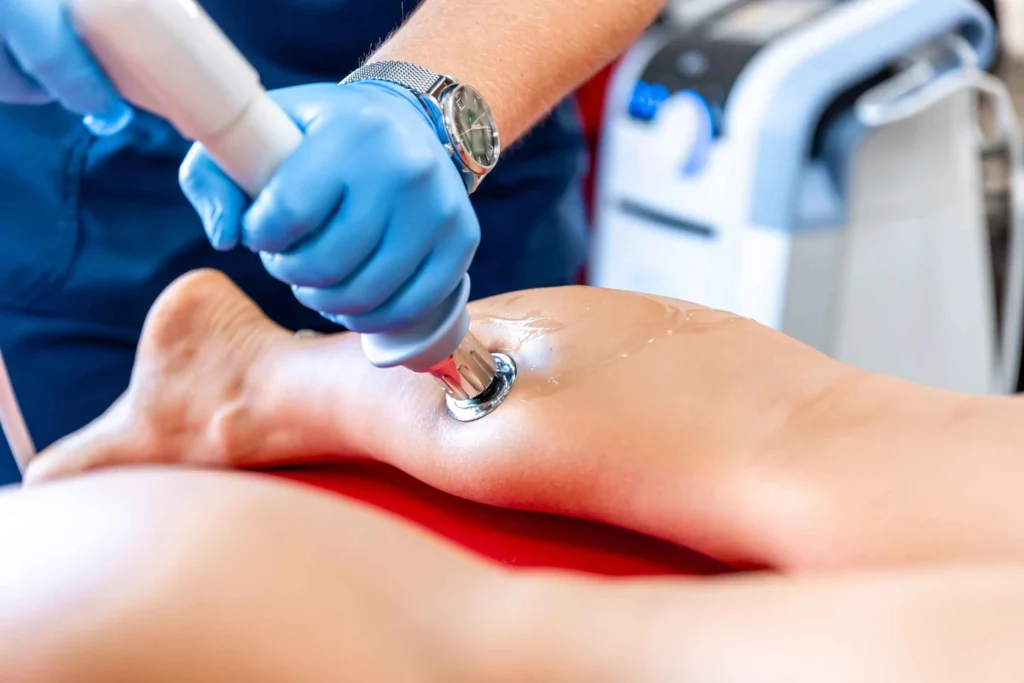
Shockwave therapy – also called Extracorporeal Shock Wave Therapy (ESWT) – is a non-surgical treatment that uses high-energy acoustic (sound) waves to penetrate deep into the body’s soft tissues. These waves are not electrical shocks; they are mechanical pressure waves similar to the kind used in medical ultrasound, but far more focused and therapeutically intense.
Originally developed in the 1980s to break down kidney stones without surgery (lithotripsy), medical researchers discovered that these acoustic pulses also had a powerful regenerative effect on musculoskeletal tissue. Since then, shockwave therapy has become widely used in orthopedics, sports medicine, and chiropractic care to treat a broad range of chronic pain conditions.
At Loucil Chiropractic, we use state-of-the-art shockwave equipment to deliver controlled, targeted pulses precisely to the areas causing you the most pain – whether that’s your heel, shoulder, knee, lower back, or another area of chronic discomfort.
How Does Shockwave Therapy Work?
Understanding the mechanism behind shockwave therapy helps explain why it produces results in conditions where other treatments have failed.
The Science of Acoustic Pulses
When the shockwave handpiece is applied to the skin over a treatment area, it delivers rapid, high-pressure sound waves that penetrate several centimeters into the tissue. These waves create a phenomenon called cavitation – the formation and collapse of microscopic bubbles within the tissue fluid. This micro-mechanical disruption breaks down calcified deposits, scar tissue, and adhesions that are often the root cause of chronic pain.
At the same time, the acoustic energy triggers a cascade of biological repair signals in the body.
Cellular-Level Healing Responses
At the cellular level, shockwave therapy:
- Stimulates collagen production – Collagen is the primary structural protein in tendons, ligaments, and connective tissue. Shockwaves stimulate fibroblasts (the cells responsible for producing collagen) to regenerate and strengthen damaged tissue.
- Promotes neovascularization – Acoustic pulses encourage the formation of new blood vessels in the treated area, dramatically improving circulation and oxygen delivery to tissue that may have been chronically under-perfused.
- Breaks down calcifications – Calcium deposits that have built up in tendons (a hallmark of conditions like calcific tendinitis) are mechanically disrupted and gradually reabsorbed by the body.
- Desensitizes pain receptors – Shockwaves reduce the concentration of substance P, a neurotransmitter involved in pain signaling, providing both immediate and lasting pain relief.
- Disrupts scar tissue and adhesions – Fibrous scar tissue that has built up from old injuries or repeated micro-trauma is broken apart, restoring normal tissue flexibility and movement.
This multi-layered biological response is why shockwave therapy doesn’t just mask pain – it actively repairs the underlying tissue damage causing it. For patients dealing with conditions like sciatica or herniated discs where nerve involvement complicates healing, shockwave therapy is often combined with other treatments. Our spinal decompression therapy gently relieves disc pressure while shockwave addresses the surrounding soft tissue, creating a powerful combined approach.
Types of Shockwave Therapy
There are two main delivery methods used in clinical practice:
- Radial Shockwave Therapy (RSWT): Pressure waves radiate outward from the treatment tip, covering a broader treatment area. This is most effective for superficial and mid-depth tissue conditions such as plantar fasciitis, tennis elbow, and tendinopathies.
- Focused Shockwave Therapy (FSWT): Energy is precisely concentrated at a specific depth within the tissue. This is used for deeper conditions, calcifications, and cases requiring highly targeted treatment.
At Loucil Chiropractic, our team selects the appropriate shockwave modality based on your specific diagnosis and the location of your injury – ensuring you receive the most effective treatment for your individual condition.
What Conditions Does Shockwave Therapy Treat?
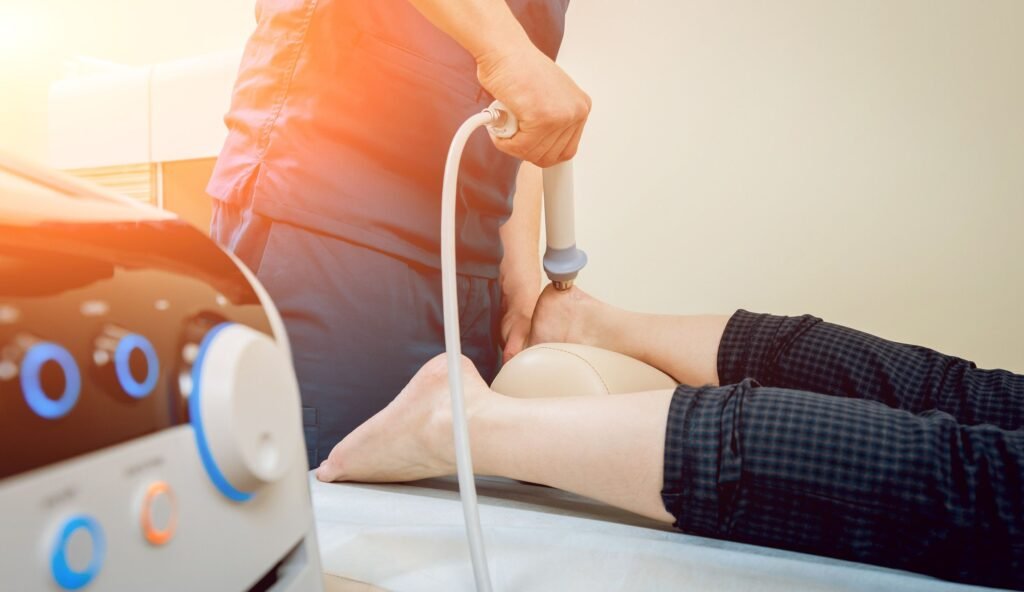
Shockwave therapy has one of the broadest evidence bases of any non-surgical musculoskeletal treatment. Here is a detailed breakdown of the conditions it most effectively addresses.
Plantar Fasciitis and Heel Pain
Plantar fasciitis is the most common cause of heel pain, affecting millions of people each year. It occurs when the plantar fascia – the thick band of tissue connecting the heel bone to the toes – becomes inflamed and micro-torn from repetitive strain. Chronic cases often involve calcification at the heel (heel spurs).
Shockwave therapy is considered one of the most effective treatments for plantar fasciitis that hasn’t responded to stretching, orthotics, or corticosteroid injections. The acoustic pulses break down heel spur calcifications, stimulate tissue repair in the fascia, and significantly reduce pain – with clinical studies showing success rates of 60 to 80% in chronic cases.
Achilles Tendinopathy
The Achilles tendon is the largest tendon in the body and is prone to degenerative changes from overuse, particularly in runners and athletes. Achilles tendinopathy involves pain, stiffness, and thickening of the tendon – often with a nodule-like area of degenerated tissue.
Shockwave therapy directly stimulates collagen remodeling in the Achilles tendon, helping to restore its structural integrity. Many patients who have struggled with this condition for months or even years experience significant improvement within a few sessions. This makes it an excellent option as part of our sports injury treatment protocols at Loucil Chiropractic.
Rotator Cuff Tendinitis and Calcific Tendinitis of the Shoulder
Rotator cuff injuries – whether from overuse, sports, or occupational strain – can lead to tendinitis, partial tears, and painful calcific deposits within the shoulder tendons. These calcium deposits are notoriously difficult to treat without surgery.
Shockwave therapy has a documented ability to mechanically fragment and stimulate the reabsorption of calcium deposits in the rotator cuff, with research showing that focused ESWT dissolves calcifications in a significant percentage of patients. For rotator cuff tendinitis without calcification, shockwave promotes tendon healing and reduces inflammation effectively.
Tennis Elbow (Lateral Epicondylitis) and Golfer’s Elbow (Medial Epicondylitis)
These conditions involve degeneration and micro-tearing at the tendon insertions on the elbow – at the outer side for tennis elbow and the inner side for golfer’s elbow. Both are caused by repetitive gripping motions and are common in both athletes and desk workers.
Shockwave therapy targets the degenerative tendon tissue at the epicondyle, stimulating fibroblast activity and collagen production to rebuild the damaged attachment point. It is widely regarded as the gold standard non-surgical treatment for chronic lateral epicondylitis.
Patellar Tendinopathy (Jumper’s Knee)
Patellar tendinopathy affects the tendon connecting the kneecap to the shinbone. It is extremely common in basketball players, volleyball players, and other athletes who place repeated jumping demands on the knee. The condition involves degenerative changes within the tendon, leading to anterior knee pain that is notoriously difficult to resolve.
Shockwave therapy stimulates the biological repair process in the patellar tendon and significantly reduces pain in the majority of patients. Combined with our physical therapy rehabilitation protocols, it forms a comprehensive approach to getting athletes back to full performance.
Hip Pain: Greater Trochanteric Pain Syndrome and Hip Flexor Tendinopathy
Greater trochanteric pain syndrome (GTPS) – pain on the outer side of the hip – is often caused by inflammation of the gluteal tendons or the trochanteric bursa. It is more common in women and in runners. Hip flexor tendinopathy affects the iliopsoas tendon and is a frequent source of pain in cyclists, dancers, and sedentary individuals with tight hip flexors.
Both conditions respond well to shockwave therapy, which reduces inflammation, breaks down fibrous scar tissue in the tendons, and stimulates regeneration.
Myofascial Trigger Points and Muscle Pain
Trigger points are hyper-irritable, taut bands within muscle tissue – commonly known as “knots.” They cause local pain and frequently refer pain to other areas of the body, contributing to chronic headaches, neck pain, and back pain. Traditional treatment involves manual pressure (trigger point release) or dry needling.
Shockwave therapy offers a non-invasive alternative that delivers powerful mechanical energy directly to the trigger point, disrupting the abnormal tension and stimulating circulation in the area. It is particularly effective for deep trigger points that are difficult to access manually. For patients whose headaches and migraines are linked to cervical trigger points and muscle tension, combining shockwave with chiropractic adjustments can produce significant, lasting relief. Learn more about how we approach this in our guide on headache and migraine relief through chiropractic care.
Chronic Back Pain and Lumbar Conditions
Chronic low back pain involving muscular and myofascial components – including trigger points in the lumbar muscles, sacroiliac joint dysfunction, and gluteal muscle pathology – responds positively to shockwave therapy. When combined with spinal adjustments and decompression, shockwave addresses the soft tissue layer of back pain while other therapies target the spinal structures directly.
For patients managing back pain that has a disc or nerve component, we often recommend reviewing our comprehensive guide on back pain causes and chiropractic treatment to understand the full picture of your condition and the treatments available.
Neck Pain and Cervicogenic Conditions
Chronic neck pain involving muscle tension, cervical trigger points, and soft tissue injury – including whiplash – can be effectively treated with shockwave therapy. The acoustic pulses penetrate deep into the cervical musculature, breaking up adhesions and trigger points that contribute to both local neck pain and referred headache patterns.
Patients recovering from whiplash injuries often benefit from shockwave as part of a broader treatment protocol that includes chiropractic adjustments and rehabilitative exercises.
What to Expect During a Shockwave Therapy Session at Loucil Chiropractic
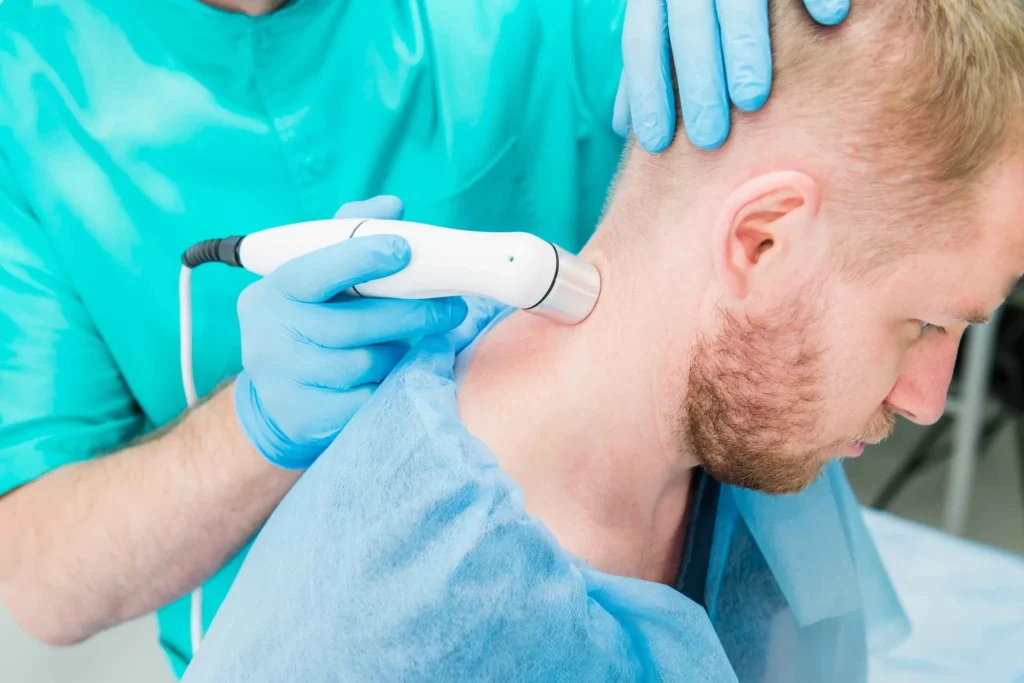
Many patients are understandably curious – and sometimes nervous – about what shockwave therapy actually feels like. Here is a realistic overview of what you can expect.
The Initial Consultation and Assessment
Before any treatment begins, our Board Certified chiropractor will conduct a thorough assessment of your condition. This includes reviewing your symptom history, performing orthopedic and neurological testing, and reviewing any imaging studies. At Loucil Chiropractic, new patients receive a free consultation and digital X-rays (valued up to $400) – so we can build a precise picture of your condition from the very first visit. There is no waitlist; we see patients promptly.
During the Treatment
A typical shockwave therapy session at our clinic follows this process:
- Identification of the treatment zone: The chiropractor identifies and marks the precise area to be treated, often using palpation to locate the most symptomatic tissue.
- Application of coupling gel: A special ultrasound-type gel is applied to the skin to allow the acoustic waves to transmit efficiently into the tissue.
- Shockwave delivery: The handpiece is applied to the treatment area and the controlled pulses are delivered. You will feel a rhythmic tapping or pulsing sensation. In the early part of treatment, it may feel uncomfortable – particularly over areas of active inflammation or trigger points. This discomfort is a sign that the therapy is reaching the right area.
- Session duration: Most sessions last 10 to 20 minutes depending on the area and severity of the condition.
Post-Treatment Experience
Most patients experience some mild soreness in the treated area for 24 to 48 hours after shockwave therapy. This is a normal inflammatory response as the healing process is initiated. Ice can be applied to manage soreness. Strenuous activity involving the treated area is generally avoided for 24 to 48 hours post-treatment.
Over the following days and weeks, patients typically notice a progressive reduction in their baseline pain and an improvement in function.
How Many Sessions Are Needed?
Most patients require 3 to 6 sessions, spaced approximately one week apart, for optimal results. Some conditions – particularly calcific tendinitis and chronic plantar fasciitis – may require additional sessions. Your treatment plan will be personalized at your initial consultation based on your specific diagnosis and how your tissue responds to initial treatment. If you want to know what to expect before starting care, our blog on questions to ask before shockwave therapy covers the key things every patient should discuss with their provider first.
Shockwave Therapy vs. Other Treatments: How Does It Compare?
Understanding how shockwave therapy fits within the broader landscape of pain treatment helps patients make informed decisions.
Shockwave vs. Corticosteroid Injections
Corticosteroid injections provide rapid pain relief by suppressing inflammation, but they do not repair the underlying tissue damage. Repeated injections can actually weaken tendons and increase the risk of rupture. Shockwave therapy, by contrast, stimulates tissue regeneration – addressing the root cause rather than suppressing symptoms. For chronic tendinopathies, shockwave offers more durable long-term outcomes.
Shockwave vs. Surgery
For conditions like calcific tendinitis, chronic plantar fasciitis, and patellar tendinopathy, surgery carries significant risks – including infection, prolonged recovery, and the possibility of incomplete resolution. Shockwave therapy offers comparable success rates for many of these conditions without any of the surgical risks, and recovery time is a fraction of what surgery requires.
Shockwave vs. Laser Therapy
Both shockwave and laser therapy are advanced non-invasive treatments – but they work differently and are often most powerful when used together. Laser therapy works at the cellular level to reduce inflammation and accelerate tissue repair through photobiomodulation, while shockwave provides the mechanical disruption needed to break down calcifications, scar tissue, and trigger points. Many of our patients at Loucil Chiropractic benefit from a combined protocol tailored to their specific condition. For a full side-by-side breakdown, our detailed guide on shockwave therapy vs. laser therapy explains exactly how each works and which conditions each is best suited for.
Shockwave vs. Physical Therapy Alone
Physical therapy and targeted rehabilitation exercises are essential for long-term recovery and prevention – but in the presence of significant tendon degeneration, calcification, or deep trigger points, exercises alone may not produce adequate tissue remodeling. Shockwave therapy accelerates the biological repair of damaged structures so that the gains from physical therapy are more rapid and sustainable. Our physical therapy and shockwave protocols work hand-in-hand for this reason. If you are an athlete managing a soft tissue injury, our in-depth post on laser therapy for sports injuries in Ives Estates shows how advanced non-invasive therapies work together to speed up recovery and restore full performance.
Who Is a Good Candidate for Shockwave Therapy?
Shockwave therapy is appropriate for most adults experiencing:
- Chronic musculoskeletal pain lasting more than 3 months
- Tendinopathy or tendinitis that has not fully resolved with conservative treatment
- Calcific deposits in tendons (particularly the shoulder or heel)
- Myofascial trigger points contributing to referred pain
- Sports injuries involving soft tissue structures
Who Should Avoid Shockwave Therapy?
Shockwave therapy is not suitable for everyone. It is generally contraindicated in the following circumstances:
- Pregnancy
- Blood clotting disorders or patients on anticoagulant therapy
- Presence of a pacemaker
- Active infection or open wounds in the treatment area
- Malignancy (cancer) in or near the treatment area
- Treatment over growth plates in children and adolescents
Our chiropractors at Loucil Chiropractic will conduct a thorough health history review to ensure shockwave therapy is safe and appropriate for you before beginning any treatment.
Why Choose Loucil Chiropractic for Shockwave Therapy in Miami?
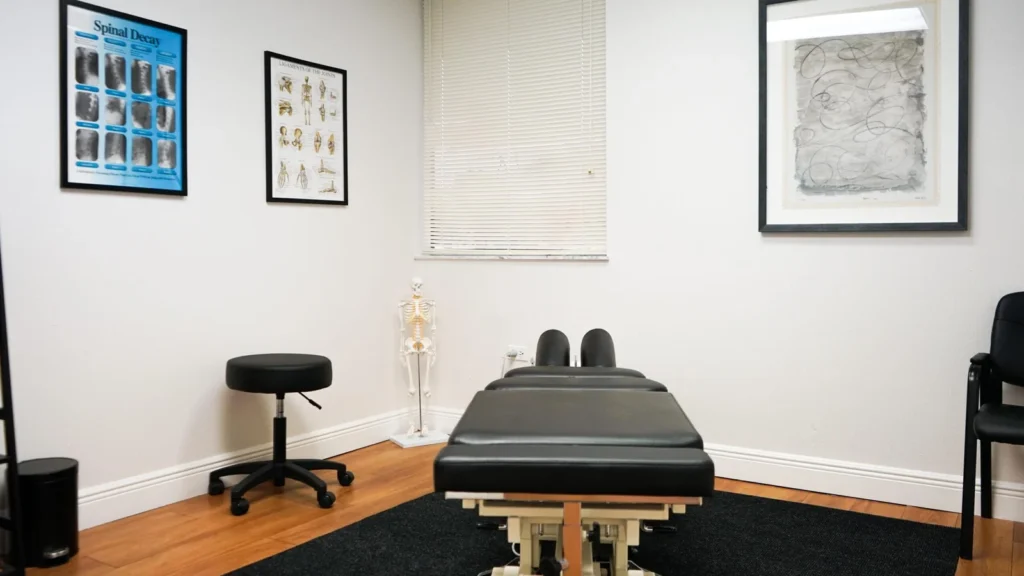
Choosing the right provider makes all the difference in your outcome. Here is what sets Loucil Chiropractic apart for patients seeking shockwave therapy in Ives Estates and the greater Miami area.
- Board-Certified Expertise: Dr. Javier Loucil, DC and the Loucil Chiropractic team are Board Certified chiropractors with over 8 years of clinical experience and more than 2,000 patients treated. Shockwave therapy is not simply a machine – the clinical skill to accurately diagnose, locate, and treat the right tissue is what determines your outcome.
- Advanced In-House Technology: We invest in state-of-the-art shockwave equipment to ensure every session delivers precise, therapeutic energy to the structures that need it most.
- Comprehensive, Integrative Care: Shockwave therapy is most effective when it’s part of a complete treatment plan. We combine shockwave with spinal adjustments, spinal decompression, laser therapy, physical therapy, and digital X-ray diagnostics – so your care addresses every layer of your condition.
- Free Consultation + Digital X-Rays for New Patients: New patients receive a complimentary consultation and digital X-rays (valued up to $400). We want to fully understand your condition before recommending any treatment.
- No Waitlist – Same-Day Response: We respect your time and your pain. Our no-waitlist policy means you get seen promptly, and our team provides same-day WhatsApp responses for any questions.
- Bilingual Care: Our team provides full care in both English and Spanish, ensuring every patient feels comfortable, understood, and fully informed.
- Serving Miami and Surrounding Communities: We proudly serve patients from Ives Estates, North Miami Beach, Miami Gardens, Hallandale Beach, Aventura, and Biscayne Gardens.
FAQs About Shockwave Therapy
Is shockwave therapy painful?
Most patients experience some discomfort during treatment – particularly over inflamed or calcified areas. The sensation is often described as a deep, rhythmic pressure or tapping. The discomfort is generally tolerable and typically subsides as the session progresses. Post-treatment soreness lasting 24 to 48 hours is normal and is part of the healing process.
How many shockwave therapy sessions will I need?
Most patients require 3 to 6 sessions spaced approximately one week apart. Conditions involving calcification or long-standing degeneration may require additional sessions. Your chiropractor at Loucil Chiropractic will outline a personalized treatment plan based on your diagnosis and clinical response.
How soon will I feel results from shockwave therapy?
Some patients notice an improvement in pain within the first 1 to 2 sessions. For others, particularly those with chronic or calcific conditions, the most significant improvement is felt 4 to 8 weeks after completing the full treatment course as the biological repair process matures.
Is shockwave therapy safe?
Yes. Shockwave therapy is a non-invasive procedure with an excellent safety record when performed by a qualified clinician. There is no radiation involved. The most common side effects are mild soreness and occasional minor bruising in the treated area, both of which resolve quickly.
Can shockwave therapy be combined with other chiropractic treatments?
Absolutely – and at Loucil Chiropractic, we typically do combine it. Shockwave therapy works synergistically with chiropractic adjustments, spinal decompression, laser therapy, and physical therapy. Your treatment plan will be designed to leverage the benefits of each modality for the fastest and most complete recovery.
Does insurance cover shockwave therapy?
Insurance coverage for shockwave therapy varies by provider and plan. We accept Cigna, Blue Cross Blue Shield, Ambetter, Humana, and United Health, among others. We recommend calling our clinic at (305) 760-5269 to verify your specific coverage before your first visit.
Is shockwave therapy effective for chronic conditions?
Yes – in fact, shockwave therapy is specifically designed for chronic musculoskeletal conditions that haven’t responded to conventional treatment. Its ability to stimulate the body’s own repair mechanisms makes it particularly valuable for conditions involving tendon degeneration, calcification, and chronic trigger points.
What is the difference between shockwave therapy and ultrasound therapy?
While both use sound waves, therapeutic ultrasound uses continuous or pulsed low-intensity sound waves primarily to produce gentle tissue heating and mild circulation improvement. Shockwave therapy uses high-energy, focused pulses that mechanically disrupt calcifications, scar tissue, and trigger points – producing a far more intense biological repair response. The two are not interchangeable.
Can shockwave therapy treat sciatica?
Shockwave therapy can address soft tissue components contributing to sciatica – particularly myofascial trigger points in the piriformis and gluteal muscles that compress the sciatic nerve. For sciatica with a disc or spinal origin, shockwave is most effective when combined with spinal decompression therapy, which directly relieves pressure on the affected nerve root. Learn more about our approach to sciatica relief and nerve pain treatment.
How do I get started with shockwave therapy at Loucil Chiropractic?
Getting started is simple. New patients receive a free consultation and digital X-rays (valued up to $400) with no waitlist. Contact us at (305) 760-5269, email info@loucilchiro.com, or book your appointment online. Our clinic is located at 1001 Ives Dairy Rd, Suite 206, Miami, FL 33179, and we serve patients from across the Miami area Monday through Wednesday and Friday 9 AM to 7 PM and Saturday 10 AM to 1 PM.
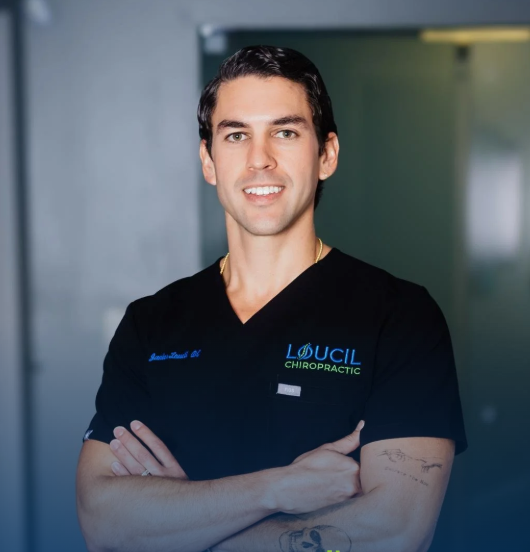
Dr. Javier Loucil, DC is a Board-Certified Doctor of Chiropractic and founder of Loucil Chiropractic in Ives Estates, Miami, FL. With 8+ years of experience and 2,000+ patients treated, he specializes in non-surgical care for back pain, sciatica, sports injuries, and car accident recovery using spinal decompression, laser therapy, and shockwave therapy to treat the root cause, not just the symptoms.