When chronic pain is holding you back, finding the right treatment can feel overwhelming – especially with so many advanced options available today. Two of the most effective non-invasive therapies in modern chiropractic and sports medicine are shockwave therapy and laser therapy. Both are proven, cutting-edge treatments that go far beyond traditional pain management, but they work in fundamentally different ways and are best suited to different types of conditions and patients.
At Loucil Chiropractic in Ives Estates, Miami, we offer both shockwave therapy and laser therapy as part of our comprehensive, evidence-based approach to pain relief and recovery. Understanding the differences between these two treatments – and knowing when each one is the right choice – is essential to getting the fastest, most complete relief from your pain. This guide will walk you through everything you need to know:
- How shockwave therapy and laser therapy each work at the biological level
- The conditions each treatment is best suited for
- Key differences in how they feel and what recovery looks like
- When combining both therapies produces the best outcomes
- How to determine which treatment is right for your specific situation
By the end, you will have a clear, practical understanding of both therapies and the confidence to make an informed decision about your care.
Understanding Shockwave Therapy: The Mechanical Repair Approach
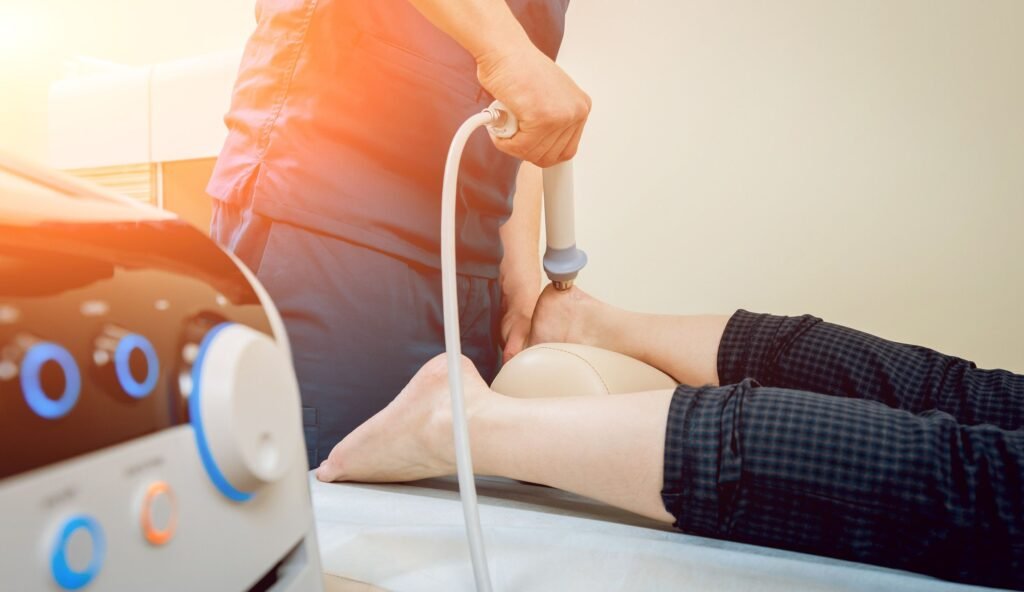
Shockwave therapy – formally known as Extracorporeal Shock Wave Therapy (ESWT) – uses high-energy acoustic (sound) waves to penetrate deep into damaged musculoskeletal tissue. These are not electrical shocks; they are powerful mechanical pressure waves that create a targeted biological repair response deep in the body.
How Shockwave Therapy Works
When the shockwave handpiece is applied to the treatment area, it delivers rapid, high-pressure pulses that travel through the skin and into the underlying tissue. This mechanical energy triggers several key healing processes:
- Breakdown of calcifications and scar tissue: The acoustic pulses mechanically disrupt calcium deposits in tendons and fibrous adhesions that form after injury – structures that the body struggles to break down on its own.
- Stimulation of collagen production: Shockwaves activate fibroblasts – the cells responsible for producing collagen – prompting the regeneration and strengthening of damaged tendons, ligaments, and connective tissue.
- Promotion of new blood vessel formation: The acoustic energy encourages neovascularization – the growth of new blood vessels – dramatically improving circulation in chronically under-perfused tissue.
- Disruption of pain signaling: Shockwaves reduce levels of substance P, a key neurotransmitter in pain transmission, providing both immediate and lasting relief.
- Trigger point release: The mechanical energy disrupts hyper-irritable muscle knots, restoring normal muscle function and reducing referred pain patterns.
This makes shockwave therapy particularly powerful for conditions involving structural tissue damage – calcifications, tendon degeneration, scar tissue buildup, and deep myofascial trigger points. Our dedicated guide on what shockwave therapy is and how it works covers the full range of conditions it treats and what to expect from your sessions.
What Shockwave Therapy Feels Like
During a shockwave session at Loucil Chiropractic, most patients feel a rhythmic, deep tapping or pressure sensation over the treatment area. Areas of active inflammation or calcification may feel more intense. Sessions typically last 10 to 20 minutes, and mild soreness in the treated area for 24 to 48 hours afterward is normal – this is part of the healing process being activated.
Understanding Laser Therapy: The Cellular Energy Approach
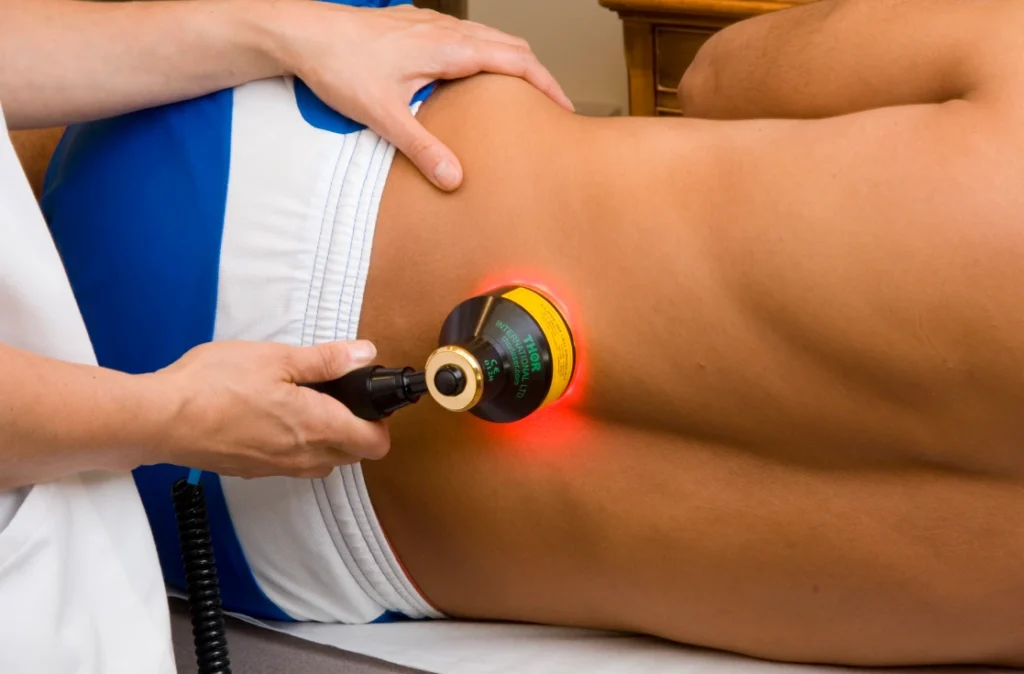
Laser therapy – also called Low-Level Laser Therapy (LLLT) or therapeutic laser therapy – works on an entirely different principle. Instead of mechanical energy, it uses focused light energy at specific wavelengths to penetrate tissue and stimulate healing at the cellular level through a process called photobiomodulation.
How Laser Therapy Works
When therapeutic laser light is applied to the skin over an injured or inflamed area, the photons (light particles) are absorbed by light-sensitive molecules called chromophores within the cells – most importantly, by mitochondria, the energy-producing organelles inside each cell. This triggers a cascade of cellular responses:
- Increased ATP production: Laser light supercharges mitochondrial function, dramatically increasing the production of ATP (adenosine triphosphate) – the primary energy currency cells use for repair, regeneration, and normal function. Damaged cells with depleted energy reserves are essentially jump-started back into active healing mode.
- Reduction of inflammation: Laser therapy modulates the inflammatory response at the cellular level, reducing pro-inflammatory cytokines and prostaglandins – the chemical messengers responsible for swelling, redness, and pain.
- Accelerated tissue repair: The cellular energy boost accelerates the natural tissue repair cycle, speeding healing of muscles, tendons, ligaments, nerves, and skin.
- Nerve regeneration support: Laser therapy has a documented ability to support the regeneration of damaged peripheral nerves, making it valuable for conditions involving nerve injury or compression.
- Pain relief through endorphin release: The photobiomodulation process stimulates the release of endorphins – the body’s natural pain-relieving chemicals – providing genuine relief rather than simply blocking pain signals.
Laser therapy is particularly effective where inflammation, cellular energy depletion, and nerve involvement are the primary drivers of pain and delayed healing. Our complete guide on what to expect from laser therapy covers what conditions it treats, how sessions are structured, and what patients typically experience.
What Laser Therapy Feels Like
Laser therapy is completely painless. Most patients feel a gentle warmth over the treatment area, and some report a pleasant, relaxing sensation during the session. There is no discomfort, no recovery period, and no soreness afterward. Sessions typically last 5 to 15 minutes depending on the size of the treatment area.
Shockwave vs. Laser Therapy: A Direct Comparison
Now that you understand how each therapy works, here is a clear side-by-side look at the key differences to help you understand which approach best fits your situation.
Mechanism of Action
Shockwave therapy works through mechanical energy – high-pressure acoustic pulses that physically disrupt calcifications, scar tissue, and trigger points while stimulating structural tissue repair. Laser therapy works through light energy – photons absorbed by cells that boost mitochondrial function, reduce inflammation, and accelerate the cellular repair process.
These are fundamentally different biological pathways, which is why the two therapies are often complementary rather than interchangeable.
Depth of Treatment
Shockwave therapy penetrates several centimeters into tissue and can target structures at significant depth – making it appropriate for deep tendon pathology, joint-adjacent structures, and thick muscle tissue. Laser therapy penetrates tissue based on its wavelength; therapeutic lasers used in clinical settings can reach depths of several centimeters, but their primary mechanism is photon absorption rather than mechanical disruption.
Pain During Treatment
Shockwave therapy involves some degree of discomfort, particularly over inflamed or calcified areas. This discomfort is typically well-tolerated and is a sign the therapy is reaching the right tissue. Laser therapy is entirely painless – making it a preferred option for patients with acute inflammation, nerve sensitivity, or a lower pain threshold.
Recovery After Treatment
Shockwave therapy produces a deliberate inflammatory response as part of its healing mechanism, so mild post-treatment soreness for 24 to 48 hours is expected and normal. Patients are advised to avoid strenuous activity in the treated area for 24 to 48 hours after each session. Laser therapy has no recovery period whatsoever – patients can return to normal activity immediately after each session.
Number of Sessions Required
Most shockwave therapy patients require 3 to 6 sessions spaced approximately one week apart. Laser therapy protocols typically involve more frequent sessions – often 6 to 12 sessions – but individual treatment plans vary based on the condition being treated and the patient’s clinical response.
Best Suited For
Shockwave therapy is best suited for structural tissue damage: calcifications in tendons, chronic tendinopathy with degeneration, deep scar tissue and adhesions, plantar fasciitis with heel spurs, myofascial trigger points, and chronic conditions that have been present for months or years without adequate resolution.
Laser therapy is best suited for conditions where inflammation is the dominant feature: acute and subacute injuries, nerve pain and compression syndromes, post-surgical recovery, conditions where touch sensitivity makes more intensive treatment uncomfortable, and cases where cellular energy depletion is slowing the natural healing process.
Which Conditions Are Best Treated by Each Therapy?
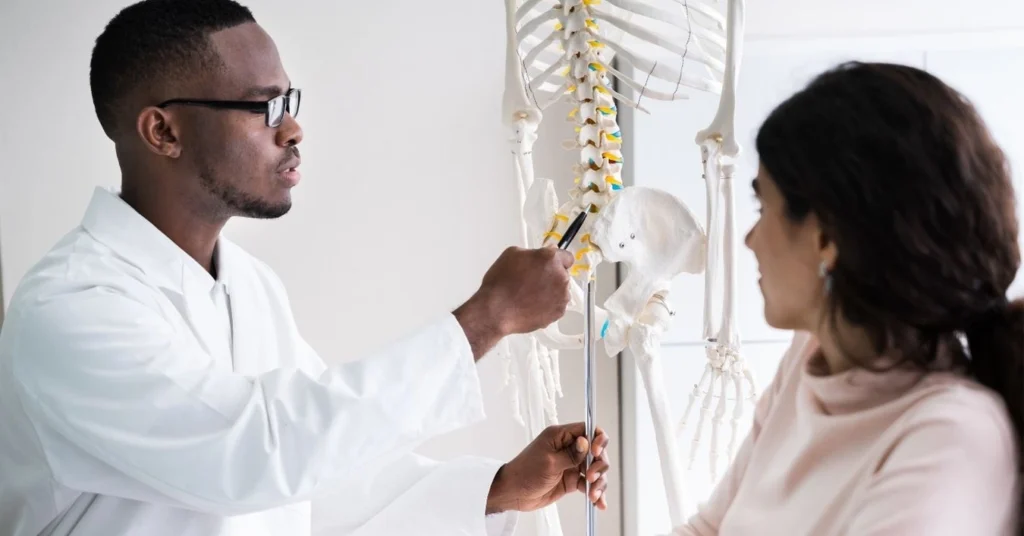
Understanding which therapy is best matched to specific diagnoses makes the decision clearer for many patients.
Conditions Where Shockwave Therapy Tends to Excel
- Plantar fasciitis and heel spurs: Shockwave’s ability to break down calcifications and stimulate fascial repair makes it one of the most effective non-surgical treatments for chronic plantar fasciitis – including cases with established heel spurs.
- Calcific tendinitis of the shoulder: Calcium deposits within the rotator cuff tendons are mechanically disrupted and reabsorbed following shockwave treatment, with strong clinical evidence for success even in cases that have failed conservative management for years.
- Achilles tendinopathy: The degenerative changes and fibrous tissue buildup in the Achilles tendon respond well to the structural repair stimulus provided by shockwave therapy, particularly when the condition has become chronic. This is a cornerstone of our sports injury treatment protocols.
- Tennis elbow and golfer’s elbow: Chronic tendinopathy at the elbow involves degenerative changes at the tendon insertion that shockwave therapy directly targets through collagen stimulation and mechanical disruption of damaged tissue.
- Myofascial trigger points and chronic muscle pain: Deep trigger points that contribute to neck pain, back pain, and referred headache patterns are effectively disrupted by shockwave’s mechanical energy – particularly when manual therapy has provided only temporary relief.
- Patellar tendinopathy: Degenerative changes in the patellar tendon respond well to shockwave-mediated collagen remodeling, especially when combined with rehabilitation exercise through our physical therapy program.
Conditions Where Laser Therapy Tends to Excel
- Acute and subacute soft tissue injuries: Freshly sprained ligaments, strained muscles, and bruised tissue heal faster with the cellular energy boost and anti-inflammatory effect of laser therapy. This is particularly relevant in the days and weeks following car accidents. Our car accident care protocols frequently incorporate laser therapy to accelerate recovery from soft tissue trauma.
- Neck pain and cervicogenic conditions: Laser therapy reduces inflammation in the cervical soft tissues and supports nerve tissue health – making it valuable for neck pain with a significant inflammatory or neurological component. Learn more about how we approach this at our neck pain treatment page.
- Sciatica and nerve pain: When sciatica involves nerve inflammation and irritation – particularly in the acute to subacute phase – laser therapy’s ability to reduce neuroinflammation and support nerve repair is highly beneficial. For the spinal component of sciatica, spinal decompression therapy directly relieves disc pressure on the nerve root, while laser addresses the inflammatory response in the surrounding tissue.
- Headaches and migraines with cervical involvement: Laser therapy reduces inflammation in the upper cervical soft tissues and helps modulate the pain signaling pathways involved in chronic headaches. Read more about our comprehensive approach to headache and migraine relief.
- Herniated disc recovery: The anti-inflammatory and nerve-supportive effects of laser therapy complement spinal decompression therapy exceptionally well in the management of herniated discs.
- Whiplash and post-accident soft tissue injury: The combination of acute inflammation, nerve irritation, and muscle guarding seen in whiplash is well matched to laser therapy’s anti-inflammatory and cellular repair-stimulating effects.
- Post-surgical recovery and wound healing: Laser therapy’s ability to accelerate cellular regeneration makes it valuable in supporting recovery after orthopedic procedures. Patients curious about what laser therapy costs and how to plan for a course of treatment will find our guide on laser therapy pricing and what affects treatment costs a helpful reference.
When Combining Both Therapies Produces the Best Results
One of the most important insights our clinical team at Loucil Chiropractic has developed is that shockwave and laser therapy are often most powerful when used together – not as competing options, but as complementary tools that address different layers of the same problem.
Consider a patient with chronic Achilles tendinopathy. The condition involves degenerative changes within the tendon (best addressed by shockwave), combined with ongoing inflammation and reduced cellular energy in the surrounding tissue (best addressed by laser). Using both therapies in a coordinated protocol means the structural damage is being repaired while the inflammatory environment is simultaneously optimized – producing faster and more complete healing than either therapy alone.
Similarly, a patient recovering from a car accident may have acute inflammation and nerve irritation best addressed by laser in the early stages of treatment, transitioning to shockwave as the condition becomes more chronic and tissue adhesions develop.
Conditions where a combined shockwave and laser protocol is particularly effective include: chronic back pain with myofascial involvement, neck pain with both structural and inflammatory components, shoulder conditions involving both tendinopathy and bursitis, sports injuries transitioning from the acute to the chronic phase, and conditions that have failed to respond adequately to either therapy in isolation.
For patients managing chronic back pain linked to long hours at a desk, both therapies can play a meaningful role – laser reducing the ongoing inflammatory load in overworked muscles, and shockwave releasing deep trigger points and adhesions. Our guide on desk job back pain relief explores how chiropractic care and advanced therapies work together for this extremely common condition.
How Our Chiropractors Determine the Right Treatment for You
At Loucil Chiropractic, we never apply a one-size-fits-all approach to treatment selection. Our Board Certified chiropractors use a structured clinical assessment process to determine which therapy – or combination of therapies – is the right choice for your specific condition, history, and goals.
The assessment process includes a thorough review of your symptom history, onset, duration, and prior treatments; orthopedic and neurological examination to identify the precise structures involved; review of imaging studies; and assessment of your pain level, tissue sensitivity, and overall health status.
New patients at Loucil Chiropractic receive a free consultation and digital X-rays (valued up to $400) – giving us a complete diagnostic picture from the very first visit. Our digital X-ray technology provides high-resolution imaging that helps us identify calcifications, structural changes, and spinal alignment issues that directly influence treatment selection.
There is no waitlist at our clinic. We see patients promptly, and our team provides same-day WhatsApp responses so your questions never go unanswered.
What to Expect from Your Treatment Plan at Loucil Chiropractic
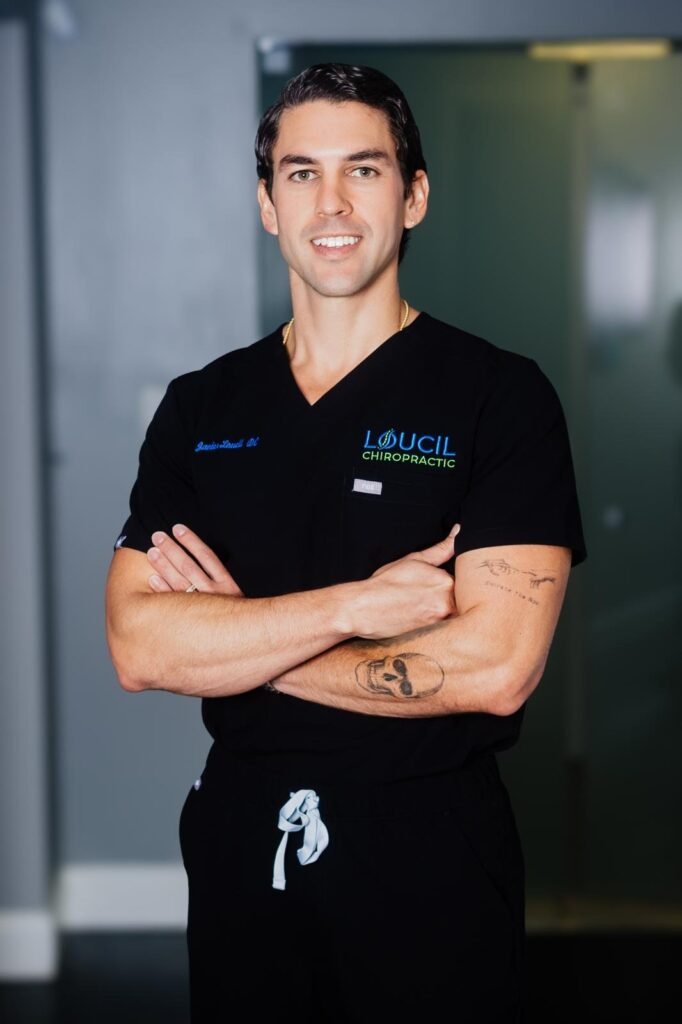
Whether your plan includes shockwave therapy, laser therapy, or a combination of both, your treatment at Loucil Chiropractic will be fully personalized to your condition and integrated with other care modalities as clinically appropriate.
Shockwave and laser therapy are most effective when they form part of a broader treatment plan. Depending on your diagnosis, your plan may also include chiropractic spinal adjustments to correct alignment and restore joint function; spinal decompression therapy for conditions involving disc compression or nerve root pressure; physical therapy and rehabilitative exercises to restore strength, flexibility, and movement patterns; and lifestyle and ergonomic guidance to prevent recurrence.
We also work with major insurance providers including Cigna, Blue Cross Blue Shield, Ambetter, Humana, and United Health. Call our clinic at (305) 760-5269 to verify your coverage before your first visit.
We proudly serve patients from Ives Estates, North Miami Beach, Miami Gardens, Hallandale Beach, Aventura, and Biscayne Gardens.
Ready to visit us? Find Loucil Chiropractic on Google Maps and get directions to our clinic today.
FAQs: Shockwave Therapy vs. Laser Therapy
Can shockwave therapy and laser therapy be used in the same treatment session?
Yes, and at Loucil Chiropractic we frequently combine both therapies within the same treatment plan – sometimes in the same session. The two therapies work through completely different biological pathways and do not interfere with each other. In fact, their complementary mechanisms often produce better outcomes together than either therapy alone.
Which therapy is better for acute injuries?
Laser therapy is generally preferred for acute injuries, as it reduces inflammation and supports cellular repair without the deliberate mechanical stimulus of shockwave therapy. Shockwave is typically more appropriate once a condition has moved into the chronic phase – generally after 6 to 12 weeks. Your chiropractor will assess your injury timeline and recommend the most appropriate approach.
Which therapy is better for chronic pain that has not responded to other treatments?
Both therapies have strong evidence for chronic pain conditions that have failed conventional treatment – but for different reasons. If the chronic pain involves calcifications, tendon degeneration, or deep trigger points, shockwave is often the primary choice. If inflammation and cellular energy depletion are dominant, laser therapy may lead. For many chronic conditions, a combined protocol produces the best results.
Is laser therapy safe for patients with nerve pain?
Yes. Laser therapy is not only safe for patients with nerve pain – it is often specifically beneficial. The photobiomodulation effect supports nerve tissue repair, reduces neuroinflammation, and helps modulate pain signaling. It is commonly used as part of our treatment protocols for sciatica and other nerve compression conditions.
How long does it take to see results from each therapy?
With laser therapy, many patients notice a reduction in pain and inflammation within the first few sessions. With shockwave therapy, some patients feel improvement within 1 to 2 sessions, but the most significant results are often seen 4 to 8 weeks after completing the treatment course as the biological repair process matures. Both timelines vary based on the condition, its severity, and the individual patient.
Are there any conditions where neither shockwave nor laser therapy is appropriate?
Both therapies have specific contraindications. Shockwave therapy should not be used during pregnancy, over malignancies, over pacemakers, or over growth plates in children. Laser therapy should not be applied over malignancies, directly over the eyes, or over certain light-sensitive areas. Our chiropractors conduct a thorough health history review before recommending either treatment to ensure it is safe and appropriate for you.
Does insurance cover shockwave and laser therapy?
Coverage varies by insurance plan. We accept Cigna, Blue Cross Blue Shield, Ambetter, Humana, United Health, and additional plans. We recommend calling our clinic at (305) 760-5269 to verify your specific coverage before your appointment.
Can these therapies help with back pain and sciatica?
Yes – both therapies play a valuable role in managing back pain and sciatica. Laser therapy reduces the inflammatory component of sciatica and supports nerve health, while shockwave addresses myofascial trigger points and soft tissue adhesions that may be contributing to the pain. Both are most effective when integrated with spinal adjustments and spinal decompression for a comprehensive approach to the underlying spinal condition.
Do I need a referral to receive shockwave or laser therapy at Loucil Chiropractic?
No referral is needed. New patients can book directly and receive a free consultation and digital X-rays (valued up to $400) at their first visit. Our team will assess your condition and recommend the most appropriate treatment plan based on your diagnosis.
How do I get started?
Getting started is straightforward. Contact us at (305) 760-5269, email info@loucilchiro.com, or book your appointment online. Our clinic is located at 1001 Ives Dairy Rd, Suite 206, Miami, FL 33179. We are open Monday through Wednesday and Friday from 9 AM to 7 PM, and Saturday from 10 AM to 1 PM. There is no waitlist – and your first consultation is completely free.
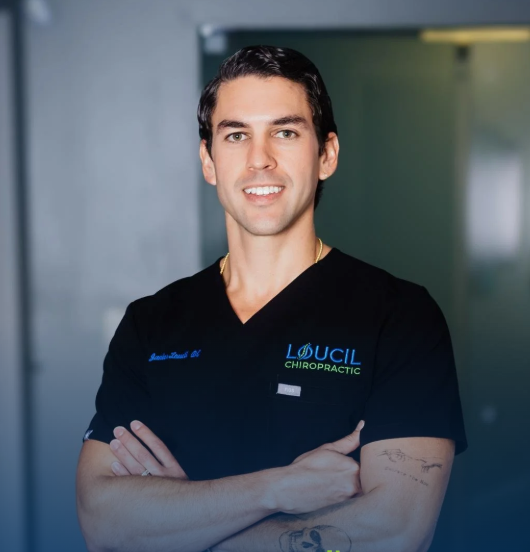
Dr. Javier Loucil, DC is a Board-Certified Doctor of Chiropractic and founder of Loucil Chiropractic in Ives Estates, Miami, FL. With 8+ years of experience and 2,000+ patients treated, he specializes in non-surgical care for back pain, sciatica, sports injuries, and car accident recovery using spinal decompression, laser therapy, and shockwave therapy to treat the root cause, not just the symptoms.