
Chronic back pain, sciatica, or herniated discs can make daily life a challenge, and the spinal decompression vs traction comparison highlights how each therapy addresses spinal pressure differently. These conditions affect millions, especially in active communities like Miami Gardens and Ives Estates. Many people explore treatments to find relief, but the options can feel overwhelming.
Two common therapies, spinal decompression and traditional traction, aim to ease spinal pressure and reduce pain. Yet, they differ in approach, technology, and results. This guide explains the science behind these treatments and why technology plays a key role in recovery. It clarifies the differences to help you choose the best path for a pain-free life.
Here’s what this guide will help you understand:
- How spinal decompression and traction differ in technology and effectiveness.
- Why advanced equipment improves outcomes for back pain and disc issues.
- Factors to consider when choosing a treatment for your recovery.
- Key benefits of non-surgical spinal decompression for conditions like sciatica. To know more about benefits of spinal decompression therapy, read our detailed guide on Top 5 Benefits of Spinal Decompression Therapy for Chronic Pain Relief
Understanding Spinal Decompression
Relieving pressure on your spine is vital for easing pain from conditions like herniated disc or sciatica. Non-surgical spinal decompression technology uses advanced, FDA-approved tables to gently stretch the spine. This creates negative pressure in the discs, allowing nutrient-rich fluid to flow to damaged areas.
The process, called vertebral separation, promotes healing and reduces discomfort. Unlike spinal fusion or decompression surgery, this method avoids invasive risks, making it a safer choice for many. Some patients also try chiropractic traction, which uses steady pulling forces to stretch the spine, though it lacks the precise, targeted approach of modern spinal decompression systems.
The main difference between traction and decompression is that traction applies a constant pull, while decompression uses targeted technology for precise relief. This therapy suits adults and athletes in Miami Gardens or Ives Estates with chronic back pain or sports injuries.
However, people with severe osteoporosis, spinal fractures, or certain conditions should avoid it. Risks like mild soreness are rare. The spinal decompression machine benefits include precision and safety, with lumbar decompression for lower back issues and cervical decompression for neck pain. Studies show over 80% success for degenerative disc disease.
At-home methods, like hanging, lack precision and may cause strain. Professional treatment is far more effective. Sessions typically last 20-30 minutes, tailored to your needs.
Alternatives to decompression include flexion-distraction or inversion equipment, but these lack the targeted relief of computerized systems. Spinal decompression treatment comparison reveals it outperforms these options for disc-related issues. While not a permanent fix, it significantly improves mobility and quality of life.
Remove back pain, sciatica and live a pain free life with Spinal Decompression Therapy
Share Your Condition vis Whatsapp!
Book Your Free ConsultationExploring Traditional Traction Therapy
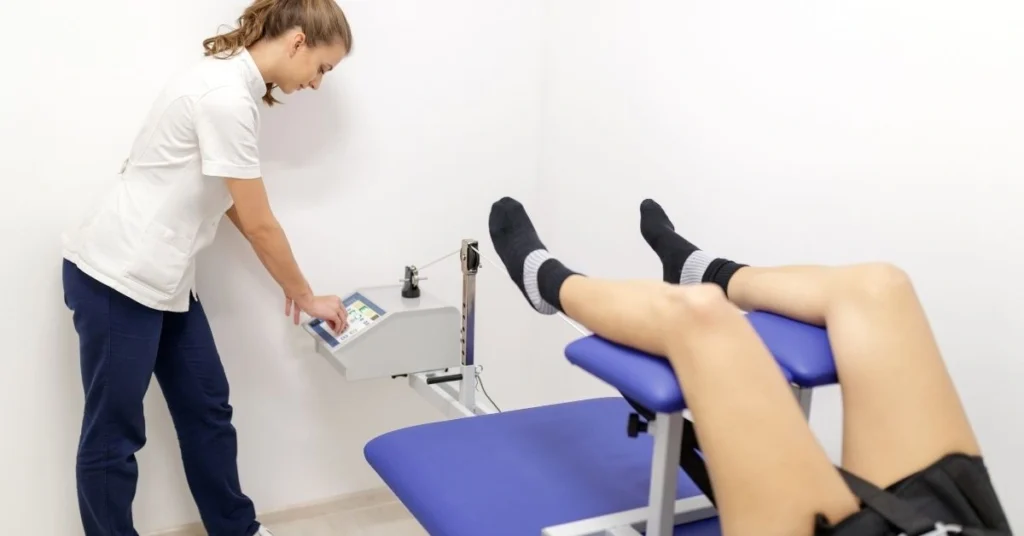
Spine traction, or traditional traction, stretches the spine to ease back pain. Used in physical therapy and chiropractic techniques, it involves manual or mechanical pulling, often with a traction table. The main goal is to reduce pressure on spinal structures, aiding muscle relaxation and spine alignment.
Two factors affect traction: the force applied and your condition. Unlike modern spinal decompression therapy, traction lacks computerized precision, leading to uneven pressure. This may not fully address bulging disc or nerve compression. Despite these limitations, the spinal traction market continues to grow as many clinics still offer it as a cost-effective therapy option.
Traction comes in forms like manual traction, where a chiropractor applies force, and mechanical traction, using basic equipment. Intersegmental traction gently moves the spine to boost flexibility and blood flow, reducing muscle spasms. Benefits of traction therapy include temporary relief and improved circulation.
However, disadvantages of spinal traction include discomfort from inconsistent force and limited effectiveness for complex issues. Alternatives like flexion-distraction, which uses gentle spinal mobilization, or inversion equipment, which relies on gravity, often fall short of decompression’s precision.
Traction therapy vs decompression therapy shows traction’s broader approach is less targeted. What are the two main types of traction? Manual traction relies on hands-on force, while mechanical traction uses devices. What are the two purposes for traction therapy? They are to relax muscles and align the spine.
What are the physiological effects of spinal traction? These include improved blood flow and reduced muscle tension. What are the side effects of traction? Mild soreness or discomfort can occur. For Miami patients, traction may not match the advanced solutions available today.
Choosing between spinal decompression and traditional traction depends on differences in technology, effectiveness, and patient comfort. Non-surgical spinal decompression uses computerized traction with FDA-approved devices to provide precise and targeted stretching at specific disc levels. In contrast, traditional traction for back pain applies a broader and less focused force through manual or mechanical methods.
Spinal decompression is more effective in promoting nutrient flow to the spinal discs which supports the recovery process better than traction, especially in cases of herniated discs. Traction involves a general stretching of the spine while distraction, which is synonymous with decompression, uses advanced technology to deliver pinpointed relief to affected areas.
Recovery after spinal decompression is typically faster, particularly for conditions like sciatica and nerve compression. There are two types of decompression therapy. Type 1 applies sustained pressure for severe disc problems and Type 2 uses intermittent pressure for milder cases. Flexion-distraction therapy differs from decompression in that it focuses on mobilizing the spinal joints whereas decompression specifically targets relieving pressure within the discs.
Decompression therapy offers greater precision compared to the more generalized approach of traction. Traction therapy can cause soreness and may produce limited results for some patients. Although traction and distraction both involve spinal stretching, traction is a broader technique while distraction is a more focused method.
At clinics such as those in Miami, decompression tables are designed to adjust to the patient’s body which enhances comfort during treatment. Traditional traction may cause discomfort because of inconsistent pressure. Intersegmental traction increases spinal flexibility but decompression directly promotes disc healing making it more suitable for complex spinal conditions.
Key Advantages of Spinal Decompression Therapy
Spinal decompression therapy is an effective, non-invasive treatment designed to relieve pressure on the spinal discs and nerves. It is commonly used for conditions such as herniated discs, sciatica, spinal stenosis, and chronic back pain.
Unlike traditional traction or spinal manipulation, spinal decompression directly targets the discs by gently stretching the spine. This creates negative pressure within the discs, encouraging herniated or bulging discs to retract and reducing nerve compression. This natural process helps to promote healing and reduce inflammation without the need for surgery or medication.
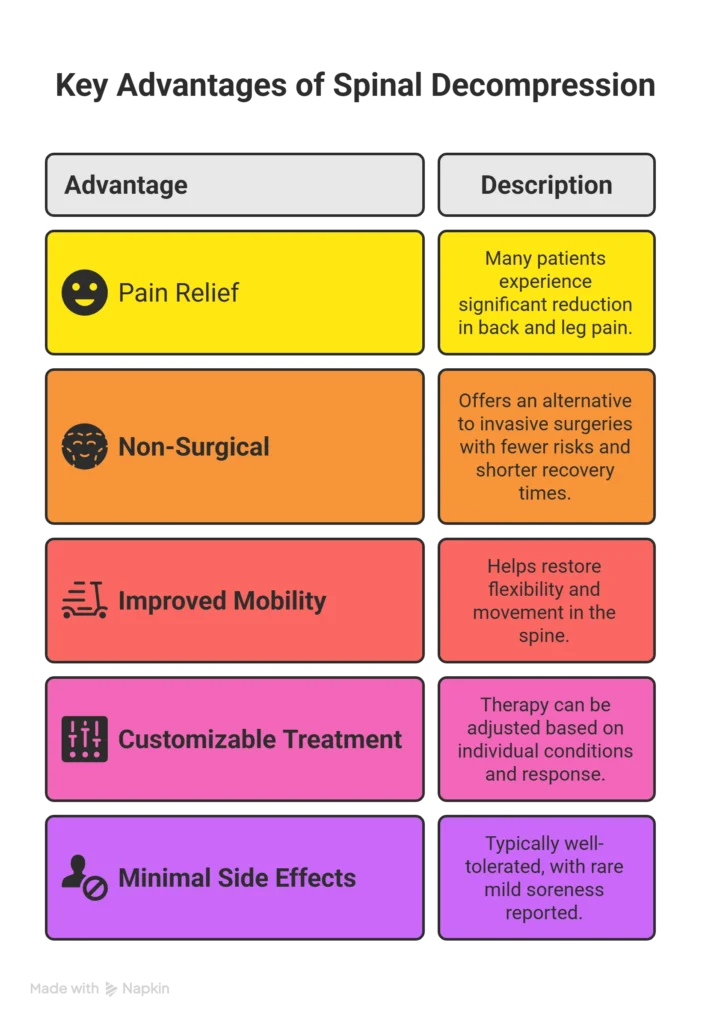
Key advantages of spinal decompression include:
- Pain Relief: Many patients experience significant reduction in back and leg pain.
- Non-Surgical: Offers an alternative to invasive surgeries with fewer risks and shorter recovery times.
- Improved Mobility: Helps restore flexibility and movement in the spine.
- Customizable Treatment: Therapy can be adjusted based on individual conditions and response.
- Minimal Side Effects: Typically well-tolerated, with rare mild soreness reported.
Spinal decompression is supported by studies reporting success rates above 80% for disc-related issues. It is particularly beneficial for adults suffering from chronic nerve compression or disc injuries, and athletes seeking recovery from spinal strain.
If you have persistent back pain, numbness, or tingling, spinal decompression therapy may be a suitable option. It is important to consult a healthcare professional to determine if this treatment fits your needs.
For a deeper understanding of this spinal decompression treatment, read our Spinal Decompression Therapy: A Comprehensive Guide to explore how the therapy works and who it benefits.
Importance of Technology in Recovery
Technology in spinal decompression has transformed recovery by directly targeting the root causes of pain. Unlike traditional traction, which primarily focuses on muscle relaxation and spine alignment, computerized traction employs advanced algorithms to achieve precise separation of the vertebrae. This precision enhances neural pathways and accelerates the healing process for conditions such as degenerative disc disease.
Spinal decompression therapy promotes healing by reducing nerve pressure and improving spinal mobility. There are two main types of decompression: Type 1, which uses sustained pressure for more severe cases, and Type 2, which applies intermittent pressure tailored to milder conditions.
While spinal traction improves circulation, it lacks the precision provided by decompression therapy. Traction may cause soreness and yield inconsistent results in some patients. Common misconceptions, such as traction or decompression therapies increasing height, are inaccurate because these treatments focus on spinal health rather than height enhancement.
Attempting to decompress the spine at home through hanging or inversion techniques lacks professional precision and may result in injury. Although spinal decompression does not provide a permanent fix, it offers lasting relief for many patients, with maintenance treatments recommended to sustain results.
The use of FDA-approved devices ensures safe and effective spinal rehabilitation for patients seeking non-surgical relief.
Remove back pain, sciatica and live a pain free life with Spinal Decompression Therapy
Share Your Condition vis Whatsapp!
Book Your Free ConsultationWhy Choose Loucil Chiropractic for Spinal Decompression
At Loucil Chiropractic, our team, led by Dr. Loucil, a Board-Certified Doctor of Chiropractic, brings over 8 years of experience. We’ve helped over 2,000 patients in Miami Gardens and Ives Estates live pain-free. Our no-waitlist policy ensures immediate care. We accept insurance like Cigna and Blue Cross Blue Shield for affordability.
Whether you’re an athlete in Hallandale Beach or seeking posture correction, our orthopedic spine care and FDA-approved devices deliver results. Who should avoid spinal decompression? Those with severe osteoporosis or fractures should consult a doctor first.
Book a free consultation today at (305) 760-5269 or our website in Miami Gardens or Ives Estates.
FAQs About Spinal Decompression vs. Traditional Traction
What’s the difference between spinal decompression and traction?
Spinal decompression vs chiropractic traction highlights decompression’s use of computerized traction for precise disc relief. Traction uses broader, manual methods, less effective for herniated disc.
What is the difference between decompression and intersegmental traction?
Decompression targets disc pressure with advanced spinal decompression technology, while intersegmental traction enhances flexibility. Decompression is better for disc healing at Loucil Chiropractic.
What is the difference between traction and distraction of the spine?
Traction stretches broadly, while distraction, or decompression, uses modern spinal decompression equipment for targeted relief, ideal for chronic back pain.
What are the benefits of spinal traction?
Traction promotes muscle relaxation, aligns the spine, and boosts circulation. It offers temporary relief but is less precise than difference between traction and decompression.
What are the benefits of spinal decompression therapy?
Spinal decompression relieves sciatica, herniated discs, and spinal stenosis, promoting healing and mobility with non-surgical precision at Loucil Chiropractic.
Conclusion
Spinal decompression outperforms traditional traction with precise, computerized traction for herniated discs, sciatica, and chronic back pain. Its advanced technology promotes faster healing and comfort. At Loucil Chiropractic, our personalized, non-surgical approach ensures lasting relief. Don’t wait to reclaim your life.
Book a free consultation today at 305-760-5269 or visit our website.
Remove back pain, sciatica and live a pain free life with Spinal Decompression Therapy
Share Your Condition vis Whatsapp!
Book Your Free Consultation
Dr. Loucil is a dedicated chiropractor and the founder of Loucil Chiro, offering compassionate, expert care focused on long-term wellness. With years of hands-on experience, he helps patients relieve pain, improve posture, and restore natural movement without drugs or surgery. His personalized chiropractic approach treats the root cause, not just the symptoms. At Loucil Chiro, Dr. Loucil creates a supportive, healing environment where patients feel heard and empowered. Whether you’re managing back pain, neck stiffness, or everyday stress, he’s here to help you live a healthier, more balanced life, one adjustment at a time.