
Chronic neck pain can make small daily movements feel stressful. Turning your head while driving, sitting at a desk, sleeping through the night, or carrying a bag can all become painful when the cervical spine is irritated.
Scoliosis can add another layer of discomfort. A curve in the spine can create uneven pressure, muscle tension, posture changes, and nerve irritation. For adults in Miami, Ives Estates, Miami Gardens, North Miami Beach, and Aventura, this can affect work, sleep, driving, exercise, and family life.
This guide explains how spinal decompression therapy in Miami may help neck pain and scoliosis related discomfort when the cause involves disc pressure, spinal nerves, muscle guarding, or poor spinal mechanics.
Can Spinal Decompression Help Neck Pain and Scoliosis?
Spinal decompression may help chronic neck pain when the pain comes from disc pressure, pinched nerves, spinal stenosis, herniated discs, or bulging discs in the cervical spine. For scoliosis, spinal decompression may reduce pressure, muscle tension, and nerve irritation, but it does not straighten or reverse the spinal curve.
At Loucil Chiropractic, spinal decompression is used as part of a personalized care plan. It may be combined with chiropractic care, physical therapy, digital X rays, laser therapy, shockwave therapy, posture support, and home movement guidance.
This matters because neck pain and scoliosis are not always simple muscle problems. Sometimes the pain comes from deeper pressure on spinal nerves, facet joints, intervertebral discs, or the spinal column.
What Causes Chronic Neck Pain in Miami Adults?
Chronic neck pain often comes from a mix of disc changes, posture stress, muscle tension, and nerve irritation. Many Miami patients spend long hours driving, working on phones, sitting at computers, or sleeping in positions that strain the cervical spine.
Common causes include:
- Degenerative discs
- Herniated discs
- Bulging discs
- Cervical spinal stenosis
- Facet joint syndrome
- Pinched nerve irritation
- Muscle tension and guarding
- Straightening of cervical lordosis
- Poor desk or phone posture
- Old car accident injuries
- Sleeping with the neck twisted
A stiff neck for two months should not be brushed off as normal. Pain that lasts that long may need an exam, especially when it comes with headaches, arm symptoms, tingling, numbness, weakness, or reduced range of motion.
If your symptoms match these patterns, our neck pain treatment page explains how Loucil Chiropractic evaluates neck pain, nerve symptoms, posture stress, and related spine problems.
Find Out What Is Causing Your Neck Pain
Loucil Chiropractic can review your symptoms, posture, nerve signs, scoliosis pattern, and imaging needs to explain whether spinal decompression may fit your care plan.
Signs Neck Pain May Be Nerve Related
Nerve related neck pain often feels different from a sore muscle. It may travel into the shoulder, arm, hand, or fingers. Some patients describe burning, tingling, numbness, electric pain, or weakness.
Watch for these signs:
- Pain that travels into the arm
- Tingling in the hand or fingers
- Numbness that does not go away
- Weak grip strength
- Trouble lifting the arm
- Neck pain with balance problems
- Pain that gets worse when looking down
- Symptoms after a crash or fall
Neck pain with weakness, walking trouble, hand clumsiness, or bladder or bowel changes needs urgent medical evaluation. These symptoms may point to spinal cord or nerve root pressure that requires fast medical attention.
A sore neck is common. Arm weakness or balance changes are not symptoms to ignore.
How Scoliosis Can Cause Neck, Shoulder, and Back Pain
Scoliosis means the spine curves sideways and may also rotate. In adults, scoliosis can create uneven load through the spinal column, spinal ligaments, muscles, facet joints, and discs. That uneven load can cause pain in the neck, shoulders, mid back, lower back, hips, or legs.
Some people ask, “Can scoliosis cause neck and shoulder pain?” Yes, it can. A curve in the thoracic spine or cervicothoracic area can change how the head, shoulders, and upper back sit. The neck muscles may work harder to keep the head balanced.
Scoliosis may contribute to:
- Neck and shoulder tension
- Back pain from uneven load
- Muscle guarding reflex
- Reduced spinal flexibility
- Posture changes
- Head tilt or uneven shoulders
- Lower back pain
- Sciatic nerve irritation in some lumbar curves
When scoliosis adds pressure near the lower spine, some patients may also feel leg pain or nerve irritation similar to sciatica.
Adult scoliosis is different from childhood scoliosis. Children and teens may need monitoring, bracing, or scoliosis specific therapy based on curve size and growth. Adults often seek care because pain, stiffness, nerve irritation, or disc degeneration has started to affect daily life.
Adult Idiopathic Scoliosis vs Adult Degenerative Scoliosis
Adult Idiopathic Scoliosis means a curve that started earlier in life and remains present in adulthood. Some adults did not know they had scoliosis until pain or posture changes led to an exam.
Adult Degenerative Scoliosis usually develops later in life due to wear and tear in the spinal discs, facet joints, and spinal structures. This type may appear with degenerative disc disease, spinal stenosis, disc herniation, lower back pain, and nerve symptoms.
| Type | Common Pattern | Main Concern |
|---|---|---|
| Adult Idiopathic Scoliosis | Curve began earlier in life | Pain, stiffness, posture strain |
| Adult Degenerative Scoliosis | Curve develops with spinal wear | Disc pressure, stenosis, nerve pain |
A scoliosis curve is often measured by the Cobb method, also called Cobb angle measurement. This helps providers understand curve size and track changes over time. Digital X rays may help evaluate posture, alignment, curve pattern, and whether referral for MRI imaging or CT scan is needed.
Can Spinal Decompression Help Scoliosis?
Spinal decompression may help scoliosis related pain by reducing pressure on irritated discs, spinal nerves, and tight muscles. It may improve comfort and flexibility in some adults, but it does not correct the Cobb angle or reverse scoliosis. Scoliosis care often works best when decompression is combined with physical therapy, posture work, and strengthening.
This is a key difference. Decompression may help symptoms, not the curve itself.
For mild scoliosis, a provider may use gentle spine therapy after reviewing the patient’s curve, pain pattern, spinal alignment, and health history. For larger or unstable curves, advanced imaging or referral may be needed before care begins.
Spinal decompression may be considered when scoliosis pain is linked to:
- Disc pressure
- Nerve root irritation
- Muscle tension
- Reduced spinal mobility
- Facet joint stress
- Degenerative discs
- Bulging discs
- Back and neck pain
If you want a broader explanation of how decompression works for disc pressure and nerve irritation, this spinal decompression therapy guide explains the treatment process in more detail.
It may not be the right choice when scoliosis is severe, unstable, linked to major neurological symptoms, or connected with another medical condition that needs specialist care.
How Cervical Spinal Decompression Works
Cervical spinal decompression works by using gentle motorized traction to reduce pressure in the neck area.
- The patient lies on a decompression table.
- The head and neck are positioned for cervical support.
- The system applies controlled traction to the cervical spine.
- The stretch creates space between spinal segments.
- Pressure may ease around discs and nerve roots.
- Blood flow and nutrient exchange may improve around the irritated area.
- Muscle guarding may calm as pressure lowers.
- Neck range of motion may improve over a series of sessions.
The goal is not to force the neck or crack the spine. The goal is controlled pressure relief. A safe plan uses the right angle, session time, and pull level for the patient’s condition.
Non surgical cervical decompression in Miami may be used for patients with chronic neck pain, herniated discs, bulging discs, degenerative disc disease, cervical spinal stenosis, or pinched nerve symptoms when screening shows it is a suitable option.
A neck decompression device at home is not the same as clinical cervical decompression. Home tools may feel helpful for mild tightness, but they can also worsen symptoms if used without diagnosis, especially when nerve pain, stenosis, scoliosis, or disc disease is present.
The safest spine decompression tool is the one matched to your diagnosis, not the one with the strongest pull.
How Many Sessions Are Needed for Neck Pain or Scoliosis Pain?
Most patients need a series of spinal decompression treatment sessions rather than one visit. A common plan may include 12 to 20 sessions over 4 to 8 weeks, though some cases may need more or less depending on the condition, pain level, and response to care.
Relief may start after a few sessions for some patients. Others need more time, especially when pain has been present for months, when degenerative discs are involved, or when scoliosis has created long term muscle tension.
A treatment plan may change based on:
- Pain level
- Range of motion
- Arm symptoms
- Muscle guarding
- Imaging findings
- Scoliosis curve pattern
- Disc herniation severity
- Response after early visits
Patients with chronic neck pain often want fast relief. That is natural. But neck pain linked to herniated discs, pinched nerves, cervical spinal stenosis, or degenerative disc disease usually needs steady care and home support.
Can Spinal Decompression Reverse Scoliosis?
Spinal decompression cannot reverse scoliosis or restore a normal curve by itself. Scoliosis is a structural curve and rotation of the spine. Decompression may help reduce pain, pressure, muscle tension, and nerve irritation, but it does not replace scoliosis specific care.
For children and teens, scoliosis treatment may involve monitoring, bracing, or scoliosis specific physical therapy such as the Schroth Method. For adults, the focus often shifts to pain relief, posture support, strength, flexibility, and function.
Spinal decompression may support adult scoliosis care by helping:
- Reduce disc pressure
- Calm nerve irritation
- Ease muscle tension
- Improve comfort during movement
- Support spinal flexibility
- Reduce back and neck pain
Scoliosis care should be realistic. The goal may be less pain, better movement, and better daily function, not a promise to erase the curve.
Decompression may help scoliosis symptoms. It is not a curve correction treatment.
Is Spinal Decompression Safe for Mild Scoliosis?
Spinal decompression may be safe for some mild scoliosis patients after a proper evaluation. Safety depends on the curve pattern, pain source, bone health, neurological symptoms, and whether the spine is stable enough for traction based care.
A patient with mild scoliosis and disc pressure may be a candidate. A patient with severe osteoporosis, spinal instability, recent surgery, fracture, tumor, or worsening nerve signs may not be.
A safer scoliosis decompression plan should include:
- Curve review
- Pain pattern review
- Bone health screening
- Digital X rays when needed
- Nerve symptom check
- Gentle traction settings
- Progress tracking
- Clear stop points if symptoms worsen
Patients often search for the safest spine decompression tool for mild scoliosis. The safer choice is not only about the table brand. It is about screening, clinical judgment, and using the right force for the person.
Who Should Avoid Spinal Decompression?
Spinal decompression is not right for every patient. Some people need imaging, medical referral, or another treatment path before decompression is considered.
You may need to avoid or delay spinal decompression if you have:
- Recent spinal fracture
- Severe osteoporosis
- Spinal tumor
- Active infection
- Recent spinal surgery
- Certain spinal implants
- Advanced instability
- Severe spinal cord compression
- Pregnancy unless cleared by a provider
- Worsening weakness
- Loss of bladder or bowel control
- Cauda equina type symptoms
Neck pain with hand weakness, balance trouble, walking difficulty, severe numbness, or sudden loss of function needs urgent medical evaluation. These are not symptoms to self treat with a neck decompression device or home traction tool.
If symptoms are getting weaker, number, or harder to control, get checked quickly.
First
Do Not Force Neck Traction Without an Exam
If neck pain comes with arm symptoms, weakness, balance changes, scoliosis, or pain after an accident, a focused exam can help choose the safest next step.
How to Ease Neck Pain Without Making It Worse
Neck pain relief should be gentle when the cause is unclear. Forcing stretches, cracking the neck, or using strong traction can make some disc or nerve problems worse.
Safer steps may include:
- Take short screen breaks
- Keep the phone closer to eye level
- Avoid sleeping with the neck twisted
- Use a supportive pillow
- Try light walking
- Use cold therapy for fresh flare ups
- Use heat for muscle tension when tolerated
- Avoid heavy lifting during flare ups
- Get evaluated if pain lasts more than a few days
Some people ask how to restore the cervical curve. Posture work, physical therapy, chiropractic care, and ergonomic changes may support healthier alignment, but curve changes depend on the cause and severity. A proper exam is the safest place to start.
Can a Chiropractor Make Scoliosis Worse?
A trained chiropractor should not force aggressive treatment on scoliosis. The risk comes from using the wrong technique, ignoring the curve pattern, or treating scoliosis as if it were only a simple back pain issue.
Scoliosis care should be measured and gentle. It should account for the curve, rotation, symptoms, age, bone health, and nerve signs.
At Loucil Chiropractic, scoliosis related pain care may include:
- Chiropractic care
- Spinal decompression when appropriate
- Physical therapy
- Posture guidance
- Laser therapy
- Shockwave therapy
- Home movement plan
- Referral when imaging or specialist care is needed
The right approach should reduce stress on the spine, not add more.
Why Choose Loucil Chiropractic for Neck Pain and Scoliosis in Miami?
Loucil Chiropractic helps Miami area patients who want clear answers before starting care. The clinic is located at 1001 Ives Dairy Rd, Suite 206, Building 1, Miami, FL 33179, and serves Ives Estates, Miami Gardens, North Miami Beach, Aventura, and nearby communities.
Patients searching for spinal decompression care in Ives Estates and Miami Gardens can visit Loucil Chiropractic for a local evaluation and a treatment plan based on their symptoms.
Dr. Javier Loucil, DC, is a board certified chiropractor and founder of Loucil Chiropractic. The clinic has served more than 2,000 patients over 8 plus years and offers bilingual English and Spanish support for Miami Dade families.
Patients often choose Loucil Chiropractic because the clinic offers:
- Free consultation for new patients
- Digital X rays when needed
- Spinal decompression therapy
- Chiropractic care
- Physical therapy
- Laser therapy
- Shockwave therapy
- Insurance support
- Car accident injury care
- No waitlist policy
- Evening and Saturday availability
For neck pain and scoliosis, the goal is not to rush every patient onto a table. The goal is to understand the pain source, explain the plan, and use the right therapy at the right time.
Miami patients need care that is local, clear, and realistic about what spinal decompression can and cannot do.
Get a Clear Plan Before Starting Treatment
If chronic neck pain or scoliosis related discomfort is affecting your sleep, work, driving, or daily movement, Loucil Chiropractic can help you understand your options before care begins.
Frequently Asked Questions
Spinal decompression may help neck pain when the pain is linked to disc pressure, herniated discs, bulging discs, cervical spinal stenosis, or pinched nerves. It is less likely to help when pain is only from a simple muscle strain. Cleveland Clinic also notes that neck pain can come from causes such as poor posture, spinal stenosis, herniated disk, and pinched nerve, which helps explain why diagnosis matters before treatment. See this Cleveland Clinic neck pain resource for general patient education.
Spinal decompression may help scoliosis related discomfort by reducing pressure on irritated discs, nerves, and tight muscles. It does not correct or reverse the spinal curve.
Spinal decompression may be useful for some adults with scoliosis related pain, stiffness, or nerve irritation. It should only be used after evaluation of the curve pattern, symptoms, and safety risks.
Spinal decompression may be safe for mild scoliosis in selected patients. Severe curves, instability, recent surgery, fracture risk, or worsening neurological symptoms may make it unsafe.
Scoliosis can be idiopathic, which means the exact cause is not clear, or degenerative, which means it develops with age related spinal wear. Some curves also relate to congenital, neuromuscular, or injury related factors. NIAMS explains that scoliosis is a sideways curve of the spine and that idiopathic scoliosis means the cause is unknown. You can review this NIAMS scoliosis resource for general background.
Yes. Scoliosis can change shoulder height, head position, spinal balance, and muscle load. This may lead to neck and shoulder pain, especially when the upper back or cervicothoracic area is involved.
Cervical spine decompression is a neck focused traction treatment that gently stretches the cervical spine to reduce pressure around discs and nerve roots.
Cervical decompression can be safe for selected patients when done by a trained provider after screening. It may not be safe with severe instability, fracture, tumor, infection, advanced spinal cord compression, or worsening weakness.
Many plans include 12 to 20 sessions over 4 to 8 weeks. The exact number depends on the condition, imaging findings, symptoms, and response to care.
No. Spinal decompression can help manage pain and pressure in some scoliosis patients, but it does not reverse scoliosis or change the Cobb angle by itself.
Yes, many patients benefit from combining decompression with physical therapy, posture work, strengthening, chiropractic care, and home movement guidance.
A spine doctor may be called an orthopedic spine specialist, neurosurgeon, physiatrist, chiropractor, or pain management physician depending on training and the type of care needed.
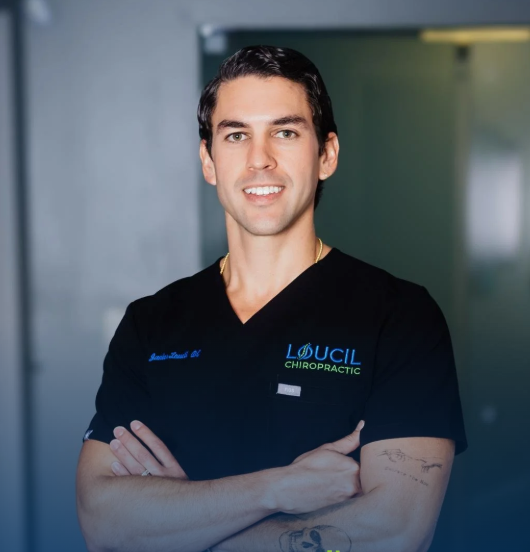
Dr. Javier Loucil, DC is a Board-Certified Doctor of Chiropractic and founder of Loucil Chiropractic in Ives Estates, Miami, FL. With 8+ years of experience and 2,000+ patients treated, he specializes in non-surgical care for back pain, sciatica, sports injuries, and car accident recovery using spinal decompression, laser therapy, and shockwave therapy to treat the root cause, not just the symptoms.