
Neck pain is one of the most common musculoskeletal complaints in the world – and yet it is also one of the most frequently dismissed. People push through it, reaching for over-the-counter pain relievers and hoping it resolves on its own. Sometimes it does. But for a significant portion of people, what starts as stiffness after a night of poor sleep or an ache from a long day at a desk gradually becomes a persistent, recurring problem that affects their ability to work, sleep, exercise, and simply get through the day.
At Loucil Chiropractic in Ives Estates, Miami, our neck pain treatment protocols are among the most requested services at our clinic – and one where our patients consistently experience meaningful, lasting results. Whether your neck pain is brand new or has been building for months or years, understanding its true cause is the foundation of effective treatment.
This guide covers everything you need to know:
 Before exploring the causes and treatments of neck pain, it helps to understand why the cervical spine is so prone to developing problems in the first place.
The cervical spine consists of seven vertebrae (C1 through C7) stacked from the base of the skull down to the upper thoracic spine. Between each pair of vertebrae sits an intervertebral disc that acts as a shock absorber and spacer. The vertebrae are connected by a network of facet joints that guide and limit movement, and the entire structure is stabilized by layers of muscles, ligaments, and tendons.
This architecture gives the neck an extraordinary range of motion – it can flex, extend, rotate, and tilt in multiple directions. But that same mobility comes at a cost. The cervical spine is the most mobile segment of the entire spine, which also makes it the most mechanically vulnerable. It must balance and support the weight of the head – typically 10 to 12 pounds – through a wide range of positions throughout the day.
Add to this the reality of modern life – prolonged screen time, desk work, driving, and the ubiquitous habit of looking down at smartphones – and you have a recipe for chronic cervical stress. Small deviations from neutral alignment, repeated many thousands of times each day, accumulate into significant strain on the discs, joints, and muscles of the cervical spine.
At Loucil Chiropractic, our digital X-ray technology allows us to visualize your cervical alignment and identify structural changes from your very first visit, giving us a precise starting point for your treatment plan.
Before exploring the causes and treatments of neck pain, it helps to understand why the cervical spine is so prone to developing problems in the first place.
The cervical spine consists of seven vertebrae (C1 through C7) stacked from the base of the skull down to the upper thoracic spine. Between each pair of vertebrae sits an intervertebral disc that acts as a shock absorber and spacer. The vertebrae are connected by a network of facet joints that guide and limit movement, and the entire structure is stabilized by layers of muscles, ligaments, and tendons.
This architecture gives the neck an extraordinary range of motion – it can flex, extend, rotate, and tilt in multiple directions. But that same mobility comes at a cost. The cervical spine is the most mobile segment of the entire spine, which also makes it the most mechanically vulnerable. It must balance and support the weight of the head – typically 10 to 12 pounds – through a wide range of positions throughout the day.
Add to this the reality of modern life – prolonged screen time, desk work, driving, and the ubiquitous habit of looking down at smartphones – and you have a recipe for chronic cervical stress. Small deviations from neutral alignment, repeated many thousands of times each day, accumulate into significant strain on the discs, joints, and muscles of the cervical spine.
At Loucil Chiropractic, our digital X-ray technology allows us to visualize your cervical alignment and identify structural changes from your very first visit, giving us a precise starting point for your treatment plan.
 Many episodes of neck pain are benign and resolve with rest and conservative self-care. However, certain symptoms indicate that your neck pain needs prompt professional evaluation. Do not wait and see if these warning signs are present.
Radiating pain, numbness, or tingling into the shoulder, arm, or hand. These symptoms suggest nerve root compression – most commonly from a cervical disc herniation or severe foraminal stenosis. Nerve compression that goes untreated can progress to muscle weakness and, in some cases, lasting nerve changes.
Progressive arm or hand weakness. Any weakness in the upper extremities associated with neck pain should be evaluated urgently, as it suggests significant nerve root or spinal cord involvement.
Neck pain following a car accident or trauma. Even if your symptoms seem mild immediately after an accident, the delayed onset of whiplash symptoms means that evaluation within the first 24 to 72 hours is essential.
Neck pain with headaches that are new, severe, or progressively worsening. While cervicogenic headaches are common and benign, sudden severe headache with neck stiffness can in rare cases indicate a serious neurological condition and warrants immediate evaluation.
Neck pain accompanied by dizziness or balance problems. These symptoms may indicate involvement of the vertebral arteries or cervical spinal cord and require careful assessment.
Neck pain that is constant, worsening, and not relieved by any position. Neck pain that behaves in this pattern – particularly when accompanied by unexplained weight loss or fever – should be evaluated to rule out non-mechanical causes.
Neck pain that has persisted for more than six weeks without improvement. Chronic neck pain that is not resolving on its own is unlikely to simply go away without targeted treatment. The longer mechanical problems in the cervical spine go untreated, the more likely they are to progress to disc degeneration, facet joint changes, and chronic pain patterns.
At Loucil Chiropractic, new patients receive a free consultation and digital X-rays (valued up to $400) so we can thoroughly assess your cervical spine from day one. There is no waitlist – we see patients promptly because we understand that neck pain is not something you should have to wait to address.
Many episodes of neck pain are benign and resolve with rest and conservative self-care. However, certain symptoms indicate that your neck pain needs prompt professional evaluation. Do not wait and see if these warning signs are present.
Radiating pain, numbness, or tingling into the shoulder, arm, or hand. These symptoms suggest nerve root compression – most commonly from a cervical disc herniation or severe foraminal stenosis. Nerve compression that goes untreated can progress to muscle weakness and, in some cases, lasting nerve changes.
Progressive arm or hand weakness. Any weakness in the upper extremities associated with neck pain should be evaluated urgently, as it suggests significant nerve root or spinal cord involvement.
Neck pain following a car accident or trauma. Even if your symptoms seem mild immediately after an accident, the delayed onset of whiplash symptoms means that evaluation within the first 24 to 72 hours is essential.
Neck pain with headaches that are new, severe, or progressively worsening. While cervicogenic headaches are common and benign, sudden severe headache with neck stiffness can in rare cases indicate a serious neurological condition and warrants immediate evaluation.
Neck pain accompanied by dizziness or balance problems. These symptoms may indicate involvement of the vertebral arteries or cervical spinal cord and require careful assessment.
Neck pain that is constant, worsening, and not relieved by any position. Neck pain that behaves in this pattern – particularly when accompanied by unexplained weight loss or fever – should be evaluated to rule out non-mechanical causes.
Neck pain that has persisted for more than six weeks without improvement. Chronic neck pain that is not resolving on its own is unlikely to simply go away without targeted treatment. The longer mechanical problems in the cervical spine go untreated, the more likely they are to progress to disc degeneration, facet joint changes, and chronic pain patterns.
At Loucil Chiropractic, new patients receive a free consultation and digital X-rays (valued up to $400) so we can thoroughly assess your cervical spine from day one. There is no waitlist – we see patients promptly because we understand that neck pain is not something you should have to wait to address.
 The most effective approach to neck pain at Loucil Chiropractic is an integrated one where each modality addresses a different layer of the condition simultaneously.
Chiropractic adjustments restore normal joint motion and correct spinal misalignment. Spinal decompression relieves disc pressure and nerve root compression for patients with disc-related neck pain. Laser therapy controls inflammation and supports nerve and soft tissue repair. Shockwave therapy releases chronic trigger points and fascial restrictions in the cervical musculature. Physical therapy rebuilds the deep cervical stability and postural control needed for lasting recovery. Postural correction and ergonomic guidance remove the daily mechanical stresses that would otherwise perpetuate the problem.
This comprehensive, multi-layered approach is why our patients achieve lasting relief rather than temporary improvement – the entire mechanical system driving the pain is addressed, not just one aspect of it.
The most effective approach to neck pain at Loucil Chiropractic is an integrated one where each modality addresses a different layer of the condition simultaneously.
Chiropractic adjustments restore normal joint motion and correct spinal misalignment. Spinal decompression relieves disc pressure and nerve root compression for patients with disc-related neck pain. Laser therapy controls inflammation and supports nerve and soft tissue repair. Shockwave therapy releases chronic trigger points and fascial restrictions in the cervical musculature. Physical therapy rebuilds the deep cervical stability and postural control needed for lasting recovery. Postural correction and ergonomic guidance remove the daily mechanical stresses that would otherwise perpetuate the problem.
This comprehensive, multi-layered approach is why our patients achieve lasting relief rather than temporary improvement – the entire mechanical system driving the pain is addressed, not just one aspect of it.
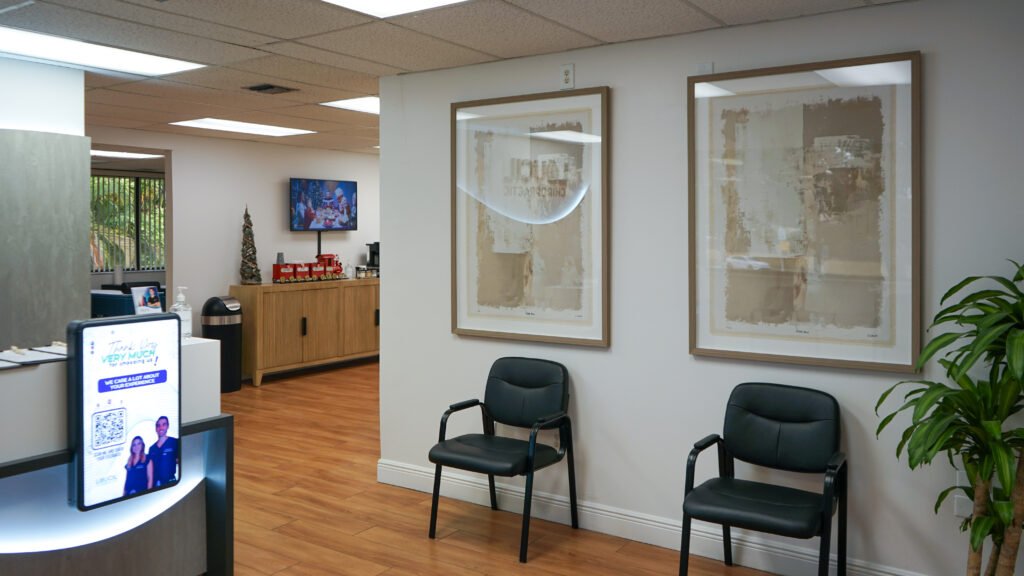 Choosing the right provider is one of the most important decisions you will make in your recovery from a Neck Pain Treatment. Here is what makes Loucil Chiropractic the trusted choice for patients across Ives Estates and the greater Miami area.
- The anatomy of the cervical spine and why it is so vulnerable to injury and strain
- The most common causes of neck pain across different age groups and lifestyles
- Warning signs that your neck pain needs professional attention
- How chiropractic care addresses the root cause of neck pain rather than just the symptoms
- The full range of treatments available at Loucil Chiropractic and how they work together
- What to expect from your recovery and how to protect your neck long term
Understanding the Cervical Spine: Why Your Neck Is So Vulnerable
Before exploring the causes and treatments of neck pain, it helps to understand why the cervical spine is so prone to developing problems in the first place.
The cervical spine consists of seven vertebrae (C1 through C7) stacked from the base of the skull down to the upper thoracic spine. Between each pair of vertebrae sits an intervertebral disc that acts as a shock absorber and spacer. The vertebrae are connected by a network of facet joints that guide and limit movement, and the entire structure is stabilized by layers of muscles, ligaments, and tendons.
This architecture gives the neck an extraordinary range of motion – it can flex, extend, rotate, and tilt in multiple directions. But that same mobility comes at a cost. The cervical spine is the most mobile segment of the entire spine, which also makes it the most mechanically vulnerable. It must balance and support the weight of the head – typically 10 to 12 pounds – through a wide range of positions throughout the day.
Add to this the reality of modern life – prolonged screen time, desk work, driving, and the ubiquitous habit of looking down at smartphones – and you have a recipe for chronic cervical stress. Small deviations from neutral alignment, repeated many thousands of times each day, accumulate into significant strain on the discs, joints, and muscles of the cervical spine.
At Loucil Chiropractic, our digital X-ray technology allows us to visualize your cervical alignment and identify structural changes from your very first visit, giving us a precise starting point for your treatment plan.
The Most Common Causes of Neck Pain
Neck pain rarely has a single cause. In most cases, it is the result of several contributing factors working together over time. Understanding which factors apply to your situation is essential for targeted, effective treatment.Muscle Strain and Postural Overload
The most common cause of acute and chronic neck pain is sustained muscular strain from poor posture. When the head moves forward out of its ideal alignment over the shoulders – a posture pattern so prevalent in desk workers and smartphone users that it has been called “tech neck” or “forward head posture” – the effective weight the cervical muscles must support increases dramatically. Research has shown that for every inch the head shifts forward from its ideal balanced position, the effective load on the cervical spine increases by roughly 10 pounds. A head positioned just two to three inches forward creates the mechanical equivalent of a 30 to 40-pound load on the cervical muscles and discs – sustained for hours every day. Over time, this creates chronic overuse in the posterior cervical muscles, weakness in the deep cervical flexors, and progressive strain on the discs and joints. The result is the familiar pattern of neck tightness, aching, and stiffness that many desk workers experience daily. For a comprehensive understanding of how posture and desk work contribute to spinal pain and what to do about it, our detailed guide on desk job back pain relief covers many principles that apply directly to the cervical spine as well.Cervical Disc Herniation and Degeneration
Just as discs in the lumbar spine can herniate and degenerate, the same process occurs in the cervical spine – and it is an extremely common source of more serious neck pain, particularly in people over 40. Cervical disc herniation occurs when the outer fibrous ring of a disc develops a tear and the inner nucleus pushes outward, potentially compressing the nerve root that exits at that level. The most commonly affected levels are C5-C6 and C6-C7. When a cervical disc herniates and compresses a nerve root, the result is cervical radiculopathy – neck pain combined with radiating pain, numbness, tingling, or weakness that travels into the shoulder, arm, or hand. The specific distribution of these symptoms corresponds to the nerve root being compressed. Cervical disc degeneration – the gradual wearing down of disc height and hydration over time – is even more common than frank herniation and contributes to chronic neck pain, stiffness, and reduced range of motion, even without significant nerve compression. Our comprehensive guide on herniated disc symptoms and non-surgical treatment explains the full spectrum of disc conditions and the conservative treatment options that address them effectively.Cervical Facet Joint Dysfunction
The facet joints are small paired joints at the back of each vertebral level that guide and control the range of cervical movement. These joints can become irritated, inflamed, or restricted – a condition known as facet joint dysfunction or cervical facet syndrome. This typically produces local neck pain that is worse with certain movements (particularly extension and rotation), along with referred pain patterns into the upper back, shoulder, and base of the skull. Facet joint dysfunction is one of the conditions that responds most consistently and rapidly to chiropractic spinal adjustment, which restores normal joint motion and reduces the mechanical irritation driving the pain.Whiplash and Cervical Trauma
Whiplash is a cervical acceleration-deceleration injury most commonly caused by rear-end motor vehicle collisions. The rapid, forceful motion of the head during impact – first hyperextending, then hyperflexing – can damage muscles, ligaments, discs, and facet joints simultaneously. The result is a complex soft tissue injury that, if not properly treated, can become a source of chronic neck pain, headaches, and neurological symptoms for years after the original accident. It is important to understand that whiplash symptoms do not always appear immediately. Many patients feel relatively fine in the hours after an accident, only to develop significant neck pain, stiffness, and headaches in the days that follow. This delayed onset is well-documented and should not be interpreted as a sign that the injury is minor. Our in-depth blog on car accident whiplash recovery explains exactly what happens to the cervical spine during impact and the step-by-step recovery process. If you have been in a motor vehicle accident, prompt evaluation is essential regardless of how you feel immediately afterward. Our whiplash treatment and car accident care pages explain our specialized approach to post-accident cervical injury in detail.Cervicogenic Headaches
One of the most underrecognized consequences of chronic neck dysfunction is cervicogenic headache – head pain that originates from the cervical spine and its associated muscles, joints, and nerves rather than from within the brain itself. These headaches typically originate at the base of the skull and radiate forward over the top of the head or into the forehead and eye area. They are often unilateral, meaning they affect one side more than the other, and are commonly accompanied by neck stiffness and tenderness. Cervicogenic headaches are frequently misdiagnosed as tension headaches or migraines, leading to years of ineffective treatment. Addressing the underlying cervical dysfunction – through chiropractic adjustment, soft tissue therapy, and postural correction – is the only approach that resolves the root cause rather than temporarily suppressing symptoms. Our dedicated guide on headache and migraine relief through chiropractic care explores the cervical connection to headaches in detail. For a clinically focused breakdown of how spinal care resolves headaches rooted in cervical dysfunction, our blog on chiropractic care for headache and migraine relief is a valuable companion read.Cervical Stenosis and Spinal Canal Narrowing
Cervical stenosis refers to a narrowing of the spinal canal in the neck, which can compress the spinal cord itself (myelopathy) or the nerve roots (radiculopathy). It is most commonly caused by degenerative changes – bone spurs, thickened ligaments, and disc degeneration – that gradually encroach on the available space within the canal. Symptoms of cervical myelopathy can include hand clumsiness, balance difficulties, weakness in the arms or legs, and in severe cases, bladder or bowel dysfunction. Cervical stenosis requires careful clinical evaluation to determine the degree of cord compression and the appropriate treatment approach. Milder to moderate cases often respond well to conservative chiropractic and decompression-based care.Sleeping Position and Pillow Problems
A surprisingly common cause of acute neck pain – the kind you wake up with after a poor night’s sleep – is an unsupportive sleeping position or pillow. Sleeping on your stomach, in particular, forces the neck into prolonged rotation and extension that can cause significant joint and muscle strain overnight. An overly thick or overly flat pillow can similarly position the cervical spine in a sustained compromised posture for hours. While this type of neck pain often resolves within a day or two, repeated episodes are a sign that your sleeping setup needs to be corrected – and that underlying cervical dysfunction may be making your joints more sensitive to positional stress.Stress and Emotional Tension
Psychological stress has a well-documented physical effect on the neck and upper shoulder muscles. When we are under stress, we unconsciously elevate and tense our shoulder and neck muscles – a protective posture that, when sustained for long periods, leads to significant muscle fatigue, trigger point formation, and neck pain. This is one of the reasons why neck pain so often worsens during demanding periods at work or during times of personal stress. Addressing the muscular component of stress-related neck pain through soft tissue therapy and trigger point release is an important part of comprehensive cervical care.Warning Signs That Your Neck Pain Needs Professional Attention
Many episodes of neck pain are benign and resolve with rest and conservative self-care. However, certain symptoms indicate that your neck pain needs prompt professional evaluation. Do not wait and see if these warning signs are present.
Radiating pain, numbness, or tingling into the shoulder, arm, or hand. These symptoms suggest nerve root compression – most commonly from a cervical disc herniation or severe foraminal stenosis. Nerve compression that goes untreated can progress to muscle weakness and, in some cases, lasting nerve changes.
Progressive arm or hand weakness. Any weakness in the upper extremities associated with neck pain should be evaluated urgently, as it suggests significant nerve root or spinal cord involvement.
Neck pain following a car accident or trauma. Even if your symptoms seem mild immediately after an accident, the delayed onset of whiplash symptoms means that evaluation within the first 24 to 72 hours is essential.
Neck pain with headaches that are new, severe, or progressively worsening. While cervicogenic headaches are common and benign, sudden severe headache with neck stiffness can in rare cases indicate a serious neurological condition and warrants immediate evaluation.
Neck pain accompanied by dizziness or balance problems. These symptoms may indicate involvement of the vertebral arteries or cervical spinal cord and require careful assessment.
Neck pain that is constant, worsening, and not relieved by any position. Neck pain that behaves in this pattern – particularly when accompanied by unexplained weight loss or fever – should be evaluated to rule out non-mechanical causes.
Neck pain that has persisted for more than six weeks without improvement. Chronic neck pain that is not resolving on its own is unlikely to simply go away without targeted treatment. The longer mechanical problems in the cervical spine go untreated, the more likely they are to progress to disc degeneration, facet joint changes, and chronic pain patterns.
At Loucil Chiropractic, new patients receive a free consultation and digital X-rays (valued up to $400) so we can thoroughly assess your cervical spine from day one. There is no waitlist – we see patients promptly because we understand that neck pain is not something you should have to wait to address.
How Chiropractic Care Addresses the Root Cause of Neck Pain
Chiropractic care takes a fundamentally different approach to neck pain compared to conventional medical management. Rather than suppressing symptoms with pain medication or muscle relaxants – which address the experience of pain without addressing its cause – chiropractic care identifies and corrects the underlying mechanical dysfunction driving the pain. The cervical spine is a mechanical system. When joints are restricted, misaligned, or moving abnormally; when discs are compressed or herniated; when muscles have developed trigger points and fascial restrictions; when posture has shifted the head out of its ideal balance point – the result is pain. Correcting these mechanical problems is how lasting relief is achieved, not by blocking the pain signal while the underlying problem continues. At Loucil Chiropractic, our approach to neck pain is comprehensive and individualized – built around your specific diagnosis rather than a generic protocol.Treatment Options for Neck Pain at Loucil Chiropractic
Chiropractic Spinal Adjustments
Cervical spinal adjustment – the targeted application of controlled force to specific vertebral joints – is the primary tool of chiropractic care for neck pain, and it has one of the strongest evidence bases of any treatment for this condition. When a cervical joint becomes restricted or misaligned, it generates pain locally and refers pain to surrounding structures. It also disrupts normal biomechanics throughout the cervical spine, creating compensatory strain in adjacent segments. Chiropractic adjustment restores normal joint motion, reduces mechanical irritation of pain-sensitive joint tissues, and normalizes the biomechanics of the entire cervical region. Our Board Certified chiropractors use a range of adjustment techniques – from traditional high-velocity adjustments to gentle, low-force instrument-assisted techniques – selected based on your specific condition, age, health history, and comfort level. For patients with acute disc herniations, fractures, or severe osteoporosis, only the gentlest mobilization techniques are used.Spinal Decompression Therapy
For neck pain involving cervical disc herniation, disc degeneration, or foraminal stenosis – conditions where disc height is reduced and nerve roots are being compressed – spinal decompression therapy is one of the most effective treatments available. Cervical decompression gently and precisely distracts the cervical vertebrae, reducing intradiscal pressure and creating a negative pressure environment within the disc that encourages retraction of herniated material and promotes nutrient influx into the disc. For patients with radiating arm symptoms from cervical nerve root compression, decompression therapy can produce a rapid and significant reduction in radicular pain – often one of the first signs of genuine nerve root decompression rather than mere pain suppression. For patients dealing with both neck pain and spinal narrowing, our dedicated blog on neck pain and scoliosis treatment with spinal decompression offers a deeper look at how decompression addresses complex cervical conditions involving both disc compression and structural changes.Laser Therapy
Laser therapy – photobiomodulation – is a highly effective complementary treatment for neck pain with a significant inflammatory or neurological component. The focused light energy penetrates deep into the cervical soft tissues, boosting cellular energy production, reducing pro-inflammatory cytokines, and supporting the repair of both soft tissue and nerve structures. For patients with acute whiplash injuries, cervical radiculopathy, or neck pain with significant inflammation and muscle spasm, laser therapy reduces the inflammatory burden rapidly and without any discomfort. Sessions are painless, require no recovery period, and integrate naturally into a broader treatment plan. Laser therapy is also particularly valuable for the nerve pain component of cervical radiculopathy – the burning, electric, or hypersensitive quality that radiates into the arm – where its ability to reduce neuroinflammation and support nerve repair produces meaningful relief that other therapies may not fully address.Shockwave Therapy
Shockwave therapy addresses the musculoskeletal soft tissue layer of neck pain – the chronic trigger points, muscle adhesions, and fascial restrictions that develop in the posterior cervical musculature and upper trapezius in response to prolonged postural stress, whiplash injury, or chronic disc-related guarding. The acoustic pulses delivered by shockwave therapy mechanically disrupt these deep trigger points, break up fascial adhesions, and stimulate circulation and collagen repair in the affected tissue. For patients whose neck pain is significantly driven by myofascial tension – the familiar pattern of deep, aching tightness in the back of the neck and upper shoulders – shockwave therapy often produces rapid and significant relief, particularly when combined with chiropractic adjustments and postural rehabilitation.Physical Therapy and Rehabilitative Exercise
Physical therapy is an indispensable component of neck pain recovery, both for relieving current symptoms and for building the strength and movement quality needed to prevent recurrence. The cervical spine depends on a coordinated system of deep and superficial muscles for its stability and controlled movement. In chronic neck pain, the deep cervical flexors – the muscles most important for maintaining correct head posture – are typically inhibited and weak, while the superficial muscles are overactive and tight. This imbalance perpetuates the pain cycle and makes the cervical spine vulnerable to re-injury. Our physical therapy protocols at Loucil Chiropractic address this directly through targeted deep cervical flexor reactivation, progressive cervical stabilization exercises, and movement retraining. We also provide structured guidance on posture correction, ergonomic setup, and daily movement habits – the practical changes that translate the benefits of in-clinic treatment into lasting improvements in everyday life.Soft Tissue Therapy and Trigger Point Release
Myofascial release, trigger point therapy, and instrument-assisted soft tissue mobilization (IASTM) target the muscular and fascial component of neck pain directly. Tight, tender trigger points in the upper trapezius, levator scapulae, suboccipital muscles, and sternocleidomastoid are extremely common in neck pain patients and contribute both to local pain and to referred headache patterns. These soft tissue techniques are performed by our clinical team and are frequently combined with chiropractic adjustments and laser therapy for a synergistic effect that addresses both the joint and the muscular components of cervical dysfunction simultaneously.Postural Correction and Ergonomic Rehabilitation
For the large proportion of neck pain patients whose condition is driven or perpetuated by forward head posture and poor ergonomics, postural correction is one of the most important elements of long-term care. Correcting forward head posture requires more than simply reminding patients to sit up straight – it requires identifying the specific postural habits, workspace configurations, and movement patterns that are maintaining the problem, and systematically addressing each one. Our chiropractors work with each patient to develop a personalized postural rehabilitation plan that includes workstation ergonomics, phone and screen habits, driving posture, sleeping position guidance, and targeted exercises to strengthen the postural muscles that maintain cervical alignment.How These Treatments Work Together
The most effective approach to neck pain at Loucil Chiropractic is an integrated one where each modality addresses a different layer of the condition simultaneously.
Chiropractic adjustments restore normal joint motion and correct spinal misalignment. Spinal decompression relieves disc pressure and nerve root compression for patients with disc-related neck pain. Laser therapy controls inflammation and supports nerve and soft tissue repair. Shockwave therapy releases chronic trigger points and fascial restrictions in the cervical musculature. Physical therapy rebuilds the deep cervical stability and postural control needed for lasting recovery. Postural correction and ergonomic guidance remove the daily mechanical stresses that would otherwise perpetuate the problem.
This comprehensive, multi-layered approach is why our patients achieve lasting relief rather than temporary improvement – the entire mechanical system driving the pain is addressed, not just one aspect of it.
Long-Term Neck Health: Prevention and Maintenance
Recovering from neck pain is an achievement – but keeping it from returning is equally important. Here are the most important principles for long-term cervical health. Maintain proper posture throughout the day. Keeping your ears aligned over your shoulders and your chin gently tucked reduces the mechanical load on your cervical discs and muscles by a substantial margin. Set reminders to check your posture regularly, especially during prolonged desk or screen time. Optimize your workstation. Your monitor should be at eye level, directly in front of you, at arm’s length. Your chair should support your lumbar spine so your thoracic spine can maintain its natural curve – which directly influences your cervical posture. Your phone should be held up at eye level rather than looked down at. Strengthen your deep cervical flexors and scapular stabilizers. These are the muscle groups most commonly weakened in neck pain patients, and maintaining their strength is the single most important factor in preventing recurrence. Your physical therapy plan at Loucil Chiropractic will include specific exercises for these muscle groups that you can continue at home. Move regularly throughout the day. Prolonged static posture – whether sitting at a desk or standing in one position – is one of the most consistent drivers of cervical muscle fatigue and joint stiffness. Taking brief movement breaks every 30 to 45 minutes, including gentle neck stretches and shoulder rolls, significantly reduces cumulative cervical stress. Address stress proactively. If psychological stress is a trigger for your neck pain, developing consistent stress management practices – whether through exercise, mindfulness, sleep optimization, or other approaches – is an important part of long-term cervical health. Continue with periodic chiropractic care. Many of our patients find that periodic maintenance visits – once a month or every six weeks – help them sustain the improvements from their treatment course, catch early signs of returning dysfunction, and avoid the cycle of chronic pain flares that characterize undertreated cervical conditions.Why Choose Loucil Chiropractic for Neck Pain Treatment in Miami
Choosing the right provider is one of the most important decisions you will make in your recovery from a Neck Pain Treatment. Here is what makes Loucil Chiropractic the trusted choice for patients across Ives Estates and the greater Miami area.
- Board-Certified Expertise: Dr. Javier Loucil, DC and our clinical team are Board Certified chiropractors with over 8 years of clinical experience and more than 2,000 patients treated. Neck pain has many possible causes, and accurate diagnosis is the foundation of effective treatment. Our clinical expertise ensures your care targets the right structures with the right therapies.
- Free Consultation and Digital X-Rays for New Patients: New patients receive a complimentary consultation and digital X-rays at their first visit – valued up to $400. High-resolution cervical X-rays allow us to assess spinal alignment, disc height, bone spurs, and structural changes that directly inform your treatment plan.
- Advanced In-House Technology: Spinal decompression, laser therapy, shockwave therapy, and digital X-ray imaging are all available under one roof at Loucil Chiropractic. Your care is fully integrated – no need to travel between providers for different aspects of your treatment.
- No Waitlist – Prompt Attention: We see patients promptly and respond to inquiries the same day via WhatsApp. Neck pain that is left untreated progresses – we make sure that waiting is never a barrier to getting the care you need.
- Bilingual Care: Our team provides full care in both English and Spanish.
- Insurance Accepted: We accept Cigna, Blue Cross Blue Shield, Ambetter, Humana, United Health, and additional plans. Call (305) 760-5269 to verify your coverage before your first visit.
- Serving the Greater Miami Area: We proudly serve patients from Ives Estates, North Miami Beach, Miami Gardens, Hallandale Beach, Aventura, and Biscayne Gardens.